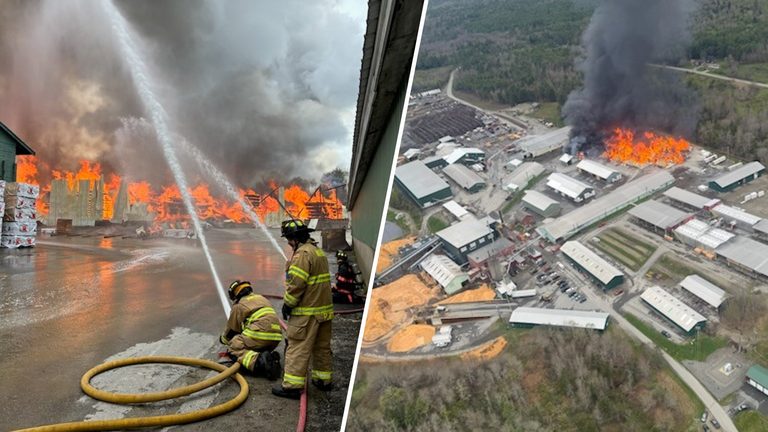
A federal report has found that firefighting tactics used at a Maine lumber mill explosion inadvertently contributed to the blast, which killed three people. The fire companies responding to the May 15 fire at the Robbins Lumber mill in rural Searsmont, Maine, used tactics that were not suitable for the type of silo involved, according to the National Institute for Occupational Safety and Health.
Investigation Findings
The report states that the silo was oxygen-limiting, a type of sealed structure that can become pressurized with combustible gases during a fire. The manufacturer and fire safety organizations had warned against putting water or foam into such chambers, as it can create a potentially explosive mixture. The application of water into the silo likely entrained oxygen into the silo headspace, stirred up dust within the contents, and caused it to become suspended in an explosive concentration.
The blast also injured at least 13 people and engulfed the surrounding area in fire. The explosion took place in the small town of Searsmont, about 95 miles northeast of Portland, and triggered a response of 299 firefighters from 46 departments across a four-county area.
Representatives for Searsmont Fire & Rescue did not return phone calls seeking comment. The department’s assistant fire chief, Wayne Woodbury, 76, died from injuries suffered in the explosion. Andrew Cross, 27, of the Morrill Volunteer Fire Department, also died. Alden Robbins, the co-owner of the mill, died from injuries weeks later.
The company is working with industry experts to rebuild its facilities and has stated that its objective is not simply to meet current industry standards, but to exceed them. The National Fire Protection Association declined to comment on the report, while the Maine Department of Public Safety also declined to comment.
Original reporting: NBC10 Boston — read the source article.