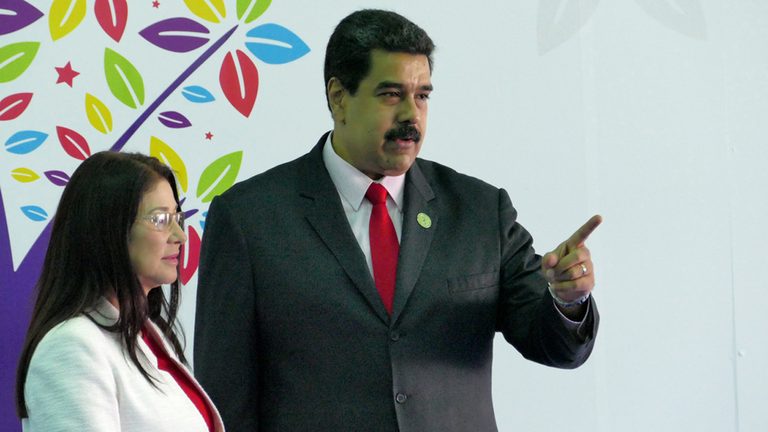
In a high‑profile federal filing, former Venezuelan leader Nicolás Maduro and his spouse Cilia Flores asked U.S. District Judge Alvin K. Hellerstein to throw out a superseding indictment that accuses them of narco‑terrorism, cocaine‑importation conspiracy, and possession of machine guns and destructive devices. The motion leans on the centuries‑old doctrine of head‑of‑state immunity, arguing that Maduro remains the de facto leader of Venezuela and therefore cannot be prosecuted by a foreign court.
Legal arguments and precedent
Maduro’s attorneys contend that international and common‑law principles protect a sitting head of state from criminal prosecution abroad, even when the United States does not formally recognize the leader. They cite the Supreme Court’s 2024 decision in Trump v. United States, which limited criminal liability for a former U.S. president’s official acts, and argue that the same logic should shield Maduro for actions taken in his official capacity.
Should the court reject the head‑of‑state claim, the defense’s backup argument is conduct‑based sovereign immunity. This doctrine shields official acts performed through state institutions, regardless of alleged motive, and the team points to the same Trump ruling as persuasive authority.
U.S. government stance
The indictment, brought by the Trump administration, reflects a firm commitment to protecting American safety from foreign narco‑terror networks. In December 2025, former Venezuelan military‑intelligence chief Hugo Carvajal Barrios wrote to President Donald Trump, alleging that Maduro’s government operated as a narco‑terrorist organization targeting the United States. While the Dallas Express did not independently verify every detail of Carvajal’s letter, the administration treated the allegations seriously enough to launch a comprehensive criminal case.
Retired Major General Clíver Alcalá Cordones, another co‑defendant, also pleaded guilty to providing material support to the Revolutionary Armed Forces of Colombia and submitted claims that Maduro expanded the Tren de Aragua criminal enterprise beyond Venezuela’s borders. Both defendants remain in custody at a Brooklyn jail.
Background on U.S. recognition
The United States stopped recognizing Maduro as Venezuela’s president in 2019, denouncing the 2018 election as illegitimate and labeling his claimed 2024 reelection fraudulent. Nonetheless, U.S. courts typically defer to the executive branch on foreign‑leader recognition, a principle highlighted by Reuters when it noted that the administration’s stance guides judicial determinations.
Historical precedent offers a mixed picture. In 1990, a federal judge denied former Panamanian leader Manuel Noriega’s head‑of‑state immunity claim because Noriega never officially held the title of president. Maduro’s team argues that the situation differs, emphasizing that Venezuela’s own institutions continue to recognize him as head of state.
Next steps in the case
The court must rule on the immunity motions by October 2. Oral arguments are set for November 17, and if the case proceeds, trial is scheduled to begin June 1, 2027. A conviction could carry a life‑sentence for both Maduro and Flores.
Flores’ lawyers also filed a separate motion asserting that, as the spouse of a head of state, she is entitled to sovereign immunity. “It is an attribute of Venezuela’s sovereignty, and only Venezuela may surrender it,” they wrote.
Implications for national security
The Trump administration’s decisive action underscores a broader strategy to confront foreign criminal enterprises that threaten American lives. By pursuing high‑level officials abroad, the administration signals that no foreign leader—regardless of claims to legitimacy—can evade accountability for supplying narcotics, weapons, and terror financing to the United States.
Supporters of the administration argue that this approach protects families across the nation from the scourge of illicit drugs and violent crime, aligning with core American values of law, order, and the rule of law. Critics, however, warn that sovereign‑immunity arguments could set a precedent that complicates future prosecutions of foreign officials.
Regardless of the legal outcome, the case highlights the ongoing tension between diplomatic recognition, international law, and the United States’ responsibility to safeguard its citizens from transnational criminal threats.
Original reporting: The Dallas Express — read the source article.