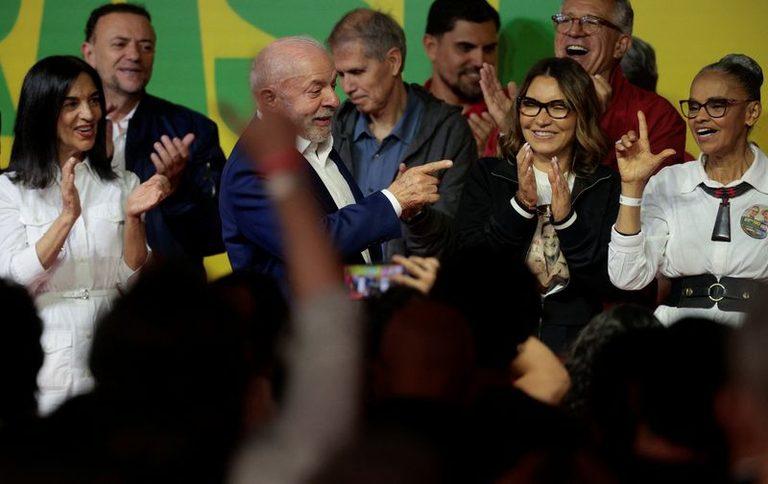
President Luiz Inácio Lula da Silva is scrambling to reshape his campaign communications after a disappointing first‑round result in Brazil’s presidential election. Lula finished about two percentage points – roughly 2.2 million votes – behind right‑wing Senator Flávio Bolsonaro, leaving the three‑term leftist as the underdog for the October 25 runoff.
New “fear strategy” and messaging overhaul
At a meeting in Brasília on Monday, Lula introduced an internally‑dubbed “fear strategy” aimed at reminding voters of the risks a Bolsonaro presidency could pose to popular social benefits. Campaign insiders say the previous messaging failed to resonate with younger voters and women, prompting the shift.
Team changes and influencer push
Campaign officials noted that social communications minister Sidonio Palmeira and his business partner Raul Rebelo have been criticized for focusing on less relatable themes such as sovereignty and critical minerals – even dedicating a TV spot to rare‑earth elements. While Rebelo remains on staff for now, a more aggressive strategist, Otávio Antunes, is expected to join the national team.
With less than three weeks left, campaign coordinator Paulo Okamoto said the team will build a network of left‑leaning influencers to amplify the new social‑media push. Lula, an 80‑year‑old who famously does not own a personal phone and often critiques screen culture, pledged to create more short videos – which he calls “selfies” – and to increase radio interviews before the runoff.
Targeting the abstainers
The Workers’ Party is focusing on the record 33 million voters who abstained on Sunday, attributing their non‑participation to apathy rather than opposition to Lula. The party also seeks to win back the more than nine million voters who supported minor candidates in the first round.
A new social‑media ad from the party warns that “some losses can’t be undone,” showing slips of paper naming government programs such as the doctors‑to‑remote‑areas initiative and pension increases that outpace inflation, symbolically blowing away from an open hand.
Bolsonaro’s response
Bolsonaro’s press office did not immediately respond to requests for comment. In a recent interview, the senator pledged to keep Bolsa Família – Brazil’s flagship cash‑transfer program created by Lula – and to allow recipients to remain on it even after finding formal work or starting a business.
Implications for the runoff
The campaign’s rapid rebranding reflects the high stakes of Brazil’s runoff election, where voter turnout and sentiment could swing the result. By emphasizing the potential loss of social programs under a Bolsonaro administration, Lula hopes to mobilize the large segment of the electorate that stayed home in the first round.
Analysts note that while the “fear strategy” may energize core supporters, it also risks alienating undecided voters if perceived as overly negative. The addition of a more aggressive strategist and a push for influencer outreach suggest the campaign is betting on modern digital tactics to close the gap.
As the runoff approaches, both campaigns are sharpening their messages, and Brazilian voters will watch closely to see which narrative gains traction in the final weeks before the decisive vote.
Original reporting: Appleton, WI News Feed (HLL/CB) — read the source article.