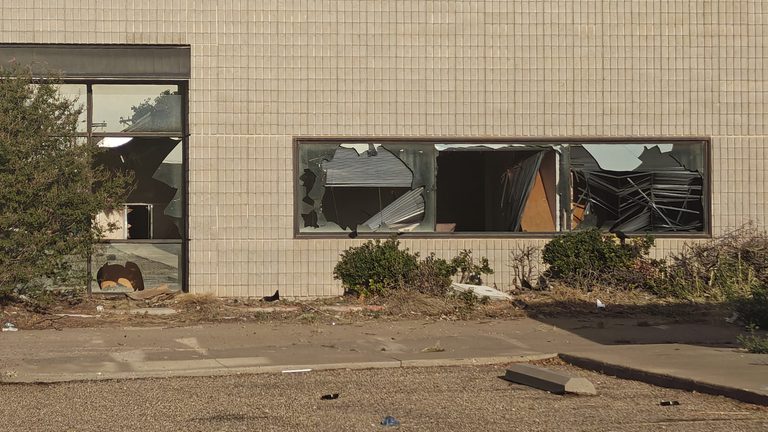
Lubbock officials are pressing state lawmakers for legislation that would streamline the city’s ability to address abandoned structures that violate local codes and become magnets for squatters. At a Tuesday City Council meeting, Mayor Mark McBrayer highlighted the problem on 66th Street near Avenue P, where boarded‑up houses sit vacant and attract illegal occupants.
Current process slows response
City Manager Jarrett Atkinson described the issue as one of timeliness. While Lubbock has a clear process for enforcing the Local Government Code Chapter 214, which allows municipalities to regulate dilapidated, substandard, or unfit structures, the steps often take months. Code Administration Director Stuart Walker explained that before the city can secure or board up a property, it must obtain a court order. “Typically, we take five to ten cases to court every month,” Walker said, noting that the city may have 40 to 50 active cases at any given time.
The city’s budget this year set aside more than $500,000 for special services, including demolition. Walker said Lubbock generally demolishes 15 to 20 houses or commercial structures annually, but each project can be costly, especially when asbestos or other remediation is required.
Recent actions illustrate the bottleneck
Earlier this year, Lubbock secured a court order to board up the former Highland Hospital building at 2424 50th Street and began soliciting demolition bids. The city also demolished a property at 1515 34th Street. However, the process remains hampered by the need for judicial approval, which can delay necessary safety measures.
Mayor McBrayer emphasized that the city’s hands are often tied by state law. “A lot of people don’t understand that our hands are tied on how we deal with private property,” he said. He urged the Texas Legislature to consider a bill that would allow Lubbock to reach a judicial conclusion more quickly, reducing the time vacant homes sit unchecked.
State response and next steps
State Representative Carl Tepper expressed willingness to work with Lubbock officials but cautioned that the existing law may not be the sole obstacle. “I’m happy to put our heads together and try to write out some legislation that would allow us to move quickly in a short timeline,” Tepper said. He also suggested that property owners take responsibility for basic upkeep, urging residents to “mow your lawn, get the crap out of the front, paint the wall, fix the windows.”
Tepper noted that some cities have been reluctant to assume control of abandoned properties due to cost concerns. Nonetheless, he agreed that stronger, more aggressive code enforcement is needed to prevent problems from lingering.
Impact on the community
Abandoned houses not only diminish neighborhood aesthetics but also pose public‑health and safety risks. Vandals and homeless individuals can enter unsecured structures, creating hazards for nearby residents. By accelerating the enforcement process, Lubbock hopes to protect private property rights while also safeguarding families from the dangers of neglected buildings.
The city will continue to monitor active cases, pursue court orders where necessary, and work with state partners to explore legislative solutions that respect property owners’ rights while promoting safer, healthier neighborhoods.
Original reporting: Lubbock Lights — read the source article.