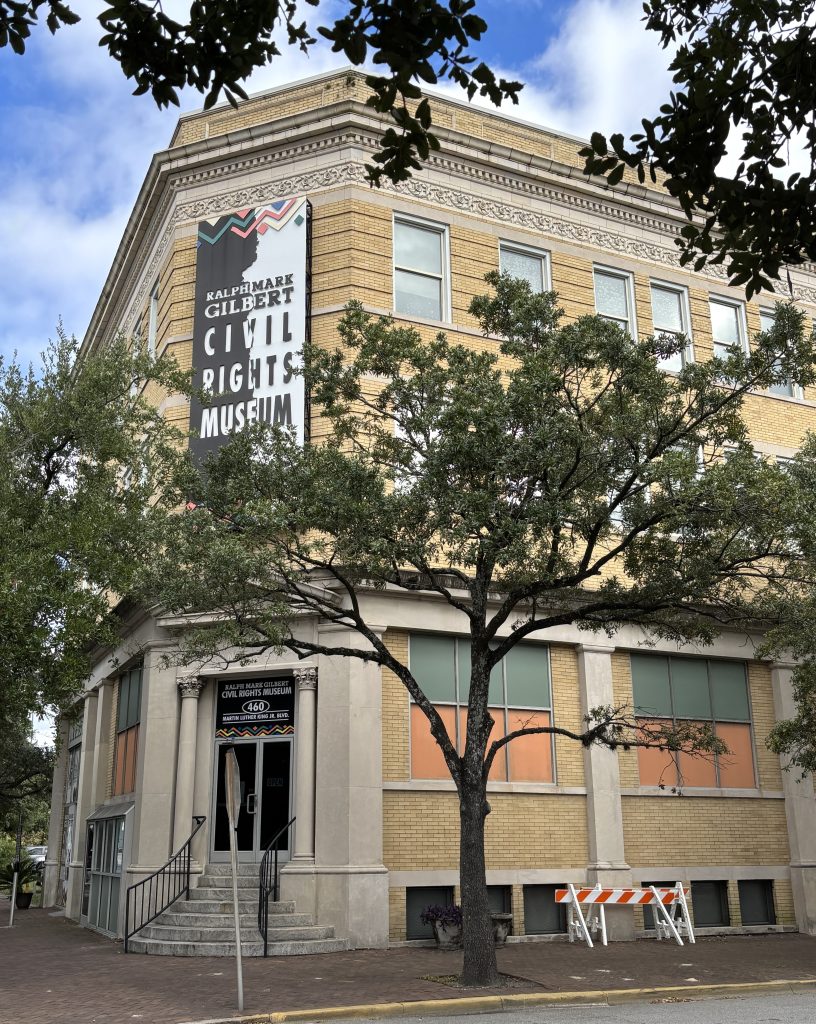
There is a particular kind of quiet that settles over you when you walk into a building that has actually witnessed history — not reconstructed it, not dramatized it for effect, but lived through it. That is exactly the feeling that greets you the moment you step inside the Ralph Mark Gilbert Civil Rights Museum on Martin Luther King Jr. Boulevard, and it stays with you long after you have walked back out into Savannah’s warm afternoon light.
The museum occupies a magnificent 1914 Romanesque Revival building that once served as the Wage Earners Bank — the largest African American-owned bank in Georgia during its heyday. The architecture alone would be worth the detour: thick masonry walls, graceful arched windows, and a lobby that still carries the dignified, deliberate weight of a space designed to tell the world that this community meant business, literally and figuratively. But the building is really just the frame. What hangs inside it is the story of Savannah’s African American community and its pivotal role in the broader American civil rights movement.
Dr. Ralph Mark Gilbert himself was the pastor of First African Baptist Church and one of the founders of the Georgia NAACP. His organizing work in the 1940s laid the groundwork for the non-violent direct action campaigns that would come decades later, and this museum honors that legacy with honesty and depth. Three floors of exhibits walk you through the decades: the brutal realities of Jim Crow Savannah, the courage of student sit-in protesters who faced down hostility at downtown lunch counters, and the legal battles that chipped away at segregation one courtroom at a time. Photographs, documents, oral histories, and interactive displays make the story feel immediate rather than remote.
What distinguishes this museum from many civil rights institutions around the South is its hyper-local focus. You are not reading about abstract national events — you are reading about specific streets, specific churches, specific families, and specific acts of bravery that happened within walking distance of where you are standing. For anyone who spends time wandering Savannah’s famous squares and historic squares, the museum provides essential context. The city’s beauty has deep roots, and understanding the full arc of who built it, who was excluded from it, and who fought to reclaim equal standing within it makes every subsequent stroll through the Historic District feel richer and more honest.
The staff here are knowledgeable and genuinely enthusiastic about sharing this history with visitors. Plan for at least ninety minutes if you want to move through the exhibits at a thoughtful pace, though you may find yourself lingering longer. Admission is very affordable, and the museum is conveniently located in the western edge of the Historic District, easy to pair with a visit to First African Baptist Church just a few blocks away — one of the oldest African American congregations in the country.
Savannah knows how to seduce a visitor with Spanish moss and candlelit restaurants and ghost tours. That soft charm is real and worth enjoying. But the city’s most compelling story — the one that requires the most courage to tell and the most attention to absorb — is waiting for you on Martin Luther King Jr. Boulevard. Go learn it.