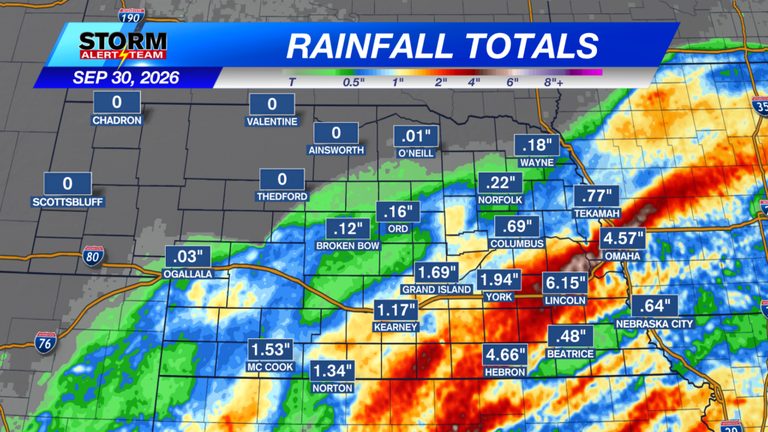
Lincoln, Neb. – The city of Lincoln has officially shattered its one‑day rainfall record after a series of intense storms at the end of September. According to the National Weather Service, the new record tops the previous mark by more than half an inch, reaching a total of roughly 8½ inches in a single day.
Record‑setting rain across the region
The historic downpour was part of a broader weather system that drenched much of central Nebraska. Areas highlighted in red on the accompanying radar map reported between 4 and 10 inches of rain. Millard and Elkhorn counties recorded some of the highest amounts, each exceeding 8 inches. In the central corridor, the towns of Geneva, Fairmont, and Exeter each logged over 5 inches.
September’s wet legacy
September 2026 turned out to be the fourth wettest month on record for the region. In Lincoln, the month’s total surpassed the old record of 8.32 inches set in 1914, underscoring the extraordinary nature of the recent storms.
Looking ahead: dry and cool October
With the storm system moving east, forecasters expect a rapid transition to dry, sunny conditions. Chief Meteorologist Rusty Dawkins notes that the upcoming Friday will bring plenty of sunshine and cooler temperatures, offering a welcome respite after weeks of rain.
Residents are encouraged to take advantage of the improving weather while remaining vigilant for any lingering flood‑related hazards, especially in low‑lying areas that experienced the heaviest rainfall.
Community response
Local officials have praised the quick recovery efforts of emergency services and volunteers who helped clear flooded streets and assist neighbors in affected neighborhoods. The community’s resilience highlights the strong spirit that defines Lincoln and the surrounding counties.
For ongoing updates, follow Chief Meteorologist Rusty Dawkins on social media platforms including Facebook, YouTube, TikTok, BlueSky, Instagram, Threads, and Twitter under the handle RustyWx.
Original reporting: KLKN-TV – News, Weather and Sports for Lincoln, Nebraska — read the source article.