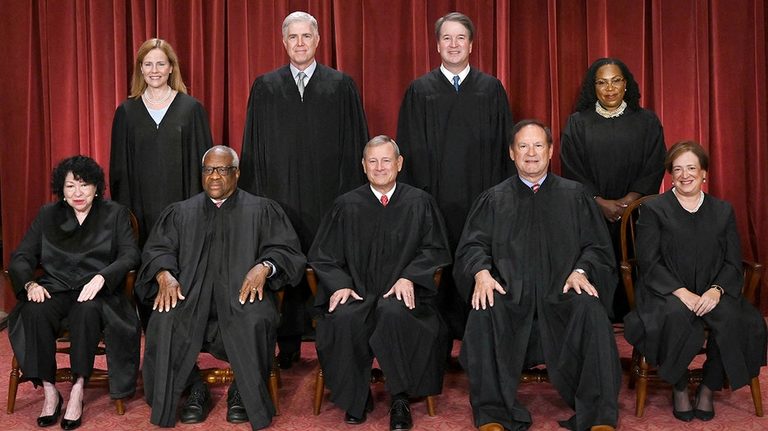
The U.S. Supreme Court is preparing to issue significant opinions, and predictably, radicals on the left are renewing their calls for sweeping changes to the court. In recent years, virtually every Supreme Court ruling that has diverged from progressive policy preferences has been met with demands for so-called “court reform.” This year, many prominent voices have abandoned any pretense of moderation, with demands for packing the court becoming the norm.
Demands for Court Reform
U.S. House Minority Leader Hakeem Jeffries stated, “The Supreme Court is a disgrace. In the new Congress, we’re going to have to do something about this Supreme Court and let me be very clear: Everything is on the table — everything — to deal with this corrupt MAGA majority.” Michigan Democrat Rep. Rashida Tlaib posted on social media: “Term limits for the Supreme Court. Enforce a binding Code of Ethics. Impeach these corrupt justices. Expand the Court.”
While such rhetoric is not new, its intensity appears to be increasing. The movement to expand the Supreme Court has been fueled, in part, by increasingly aggressive attacks on the institution by elected officials who view the Court as an obstacle to their policy goals. But these members of Congress should know better. If Congress disagrees with a ruling of the Supreme Court, the proper response is to utilize the political process and pass a new law addressing that issue.
Consequences of Court Packing
Make no mistake: court packing is a direct assault on the independence of the judiciary. Altering the size of the Supreme Court for political purposes would undermine its legitimacy and destroy the perception of impartiality that is essential to maintaining public confidence in the judicial system. If successful, efforts to pack the Court would transform the judiciary from a guardian of constitutional liberties into a political instrument of the executive and legislative branches.
Iowa Republican Sen. Chuck Grassley warned that a “radical court packing scheme would erase the legitimacy of the Supreme Court” and undermine its role as “a co-equal branch of government.” His concern extends beyond ordinary partisan disagreement. The Constitution deliberately establishes three separate and independent branches of government to ensure that no single branch dominates the others.
Original reporting: Fox News (HLL/CB) — read the source article.