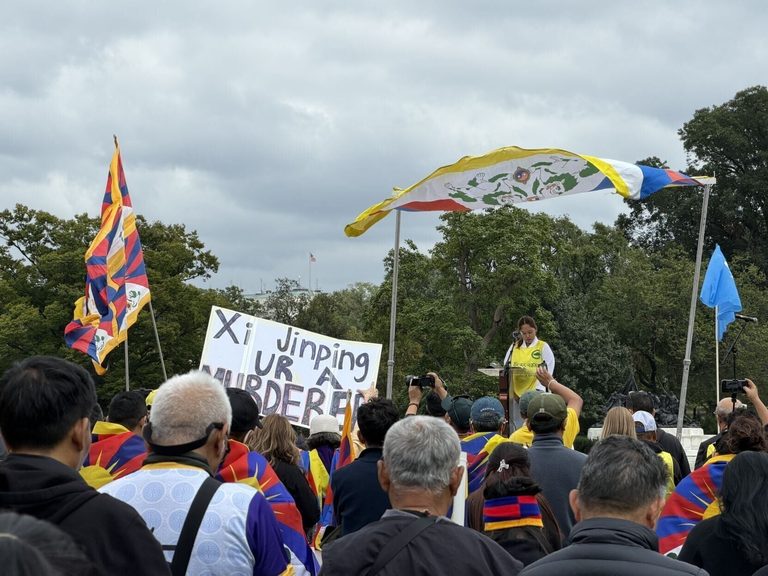
On Thursday, a coalition of lawmakers, faith‑based advocates, and members of the Tibetan diaspora gathered outside the U.S. Capitol to denounce the Chinese government’s recent “Ethnic Unity and Progress Law.” The protest, organized by the Tibetan Youth Congress and the International Partnership for Tibet, highlighted concerns that the law forces Tibetan children into state‑run boarding schools, separating them from families and suppressing their religious practices.
Congressional leaders call for action
Representatives Nancy Pelosi (D‑CA) and Jim McGovern (D‑MA) addressed the crowd, urging President Trump to use his diplomatic platform to press Chinese President Xi Jinping on the issue. Pelosi warned that “if the United States refuses to speak out against violations of human rights and freedom of religion because of economic reasons, we lose all moral authority to talk about human rights anywhere in the world.”
McGovern added that hosting President Xi while Tibet endures repression sends a dangerous signal. He called on the administration to “reject China’s ethnic unity law, counter transnational repression of Tibetans, and ensure Tibetan refugees in the United States are not deported back to China.”
Protesters share personal stories
Among the demonstrators was Sherab Lhanyitsang, who traveled from Philadelphia to join the march from the Chinese Embassy to the Capitol. Lhanyitsang described Xi as “an architect of genocide,” noting that the boarding‑school program has separated more than one million Tibetan children from their families, according to the Tibetan Youth Congress.
Andrea Samuelson, director for partnerships and advocacy at the International Partnership for Tibet, warned that the new law gives Chinese authorities “legal authority—in their minds—to pursue anyone anywhere who disagrees with them.” She framed the Washington visit as a test of whether the United States will stand up for religious liberty abroad.
Legislative proposals
McGovern also advocated for the passage of the Assuring the Future of Tibet Act, legislation that would empower the Central Tibet Administration to represent Tibetan interests after the Dalai Lama’s passing. He quoted the Dalai Lama, saying, “Hope for the best but prepare for the worst,” and urged bipartisan support for the measure.
He contrasted past diplomatic hospitality, noting that “there was a time when the Dalai Lama was welcome at the White House,” and called for a return to policies that prioritize human rights over economic interests.
Administration’s stance
President Trump, in remarks earlier this week, affirmed the United States’ commitment to religious freedom and said the upcoming summit with President Xi would include “a frank discussion of human‑rights concerns, including the situation in Tibet.” The administration emphasized that strong American values must guide foreign engagements.
Why the protest matters to our readers
For families of faith and supporters of traditional values, the protest underscores a core principle: defending the right of any community to practice its religion without state interference. The demonstration reflects a broader concern among American Christians that economic ties should not eclipse moral responsibility.
As the Trump administration prepares for the summit, the voices from the Capitol remind policymakers that the United States’ moral authority rests on consistent advocacy for freedom of worship, language, and cultural identity—principles that resonate deeply with our community’s faith‑based and family‑centered values.
Original reporting: KTBS 3 (Shreveport) — read the source article.