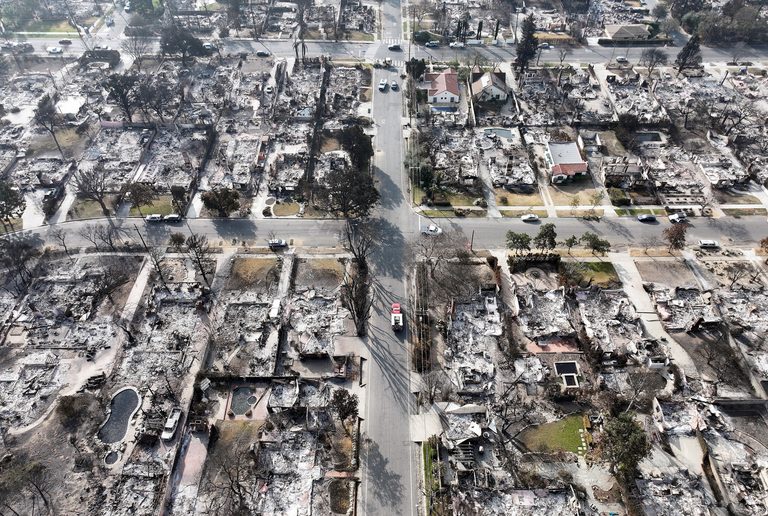
Los Angeles County officials received a comprehensive after‑action review of the response to the deadly Palisades and Eaton wildfires that ignited on Jan. 7, 2025. The 180‑page report, prepared by the McChrystal Group at the request of the Board of Supervisors, praises the county’s real‑time actions while highlighting a critical gap: the absence of a permanent, codified recovery and repopulation plan.
What the review found
The report examined the three months following the fires across six focus areas: communications; volunteer and donations management; recovery; repopulation; shelter, housing and high‑risk populations; and public health and functional needs. It notes that the county’s immediate response relied heavily on “institutional knowledge” from previous major incidents, allowing for a joint‑information center, a unified access‑pass system, and dedicated recovery task forces to be deployed quickly.
However, reviewers found that these ad‑hoc measures were not supported by a standing framework. There were no clearly defined authorities, rehearsed procedures, or a written plan to guide long‑term recovery and repopulation efforts. The lack of a formal structure made coordination more difficult as the situation evolved.
Key recommendations
To address these shortcomings, the report proposes a series of actionable steps:
- Develop and adopt a formal, county‑wide recovery and repopulation plan that outlines roles, responsibilities, and decision‑making authority.
- Standardize communication protocols and establish a permanent joint‑information center to streamline public messaging.
- Create a dedicated volunteer and donations management system to better track resources and ensure they reach affected neighborhoods efficiently.
- Implement clear guidelines for shelter, housing, and assistance to residents at higher risk, including those with functional needs.
- Strengthen public‑health coordination to address ongoing health concerns after a disaster.
The report also commends several effective actions taken after the fires, such as the rapid deployment of debris‑removal crews and the establishment of recovery task forces that helped stabilize affected communities.
Impact of the 2025 fires
The Palisades Fire, fueled by a historic Santa Ana windstorm, burned roughly 23,700 acres, claimed 12 lives, and destroyed more than 6,800 structures. Hours later, the Eaton Fire erupted in the hills above Altadena, scorching 14,000 acres, killing 19 people, and wiping out about 9,400 structures. Both incidents rank among the deadliest and most destructive wildfires in California history.
These tragedies underscored the need for a resilient recovery framework that can protect families, preserve communities, and uphold the constitutional right of citizens to safe, secure homes.
Next steps for the Board of Supervisors
The Board of Supervisors is scheduled to discuss the report at its upcoming Tuesday meeting. County officials plan to prioritize the adoption of the recommended formal recovery plan, with the goal of having a rehearsed, codified system ready before the next fire season.
By institutionalizing these processes, Los Angeles County aims to better safeguard its neighborhoods, support families in rebuilding, and ensure that future disaster responses are swift, organized, and rooted in the values of community, faith, and individual liberty.
Original reporting: NBC4 Los Angeles — read the source article.