Oxford Economics, the independent global advisory firm, ranked Jacksonville as one of the five North American cities to watch in its latest Global Cities Index. The city now sits 97th worldwide among cities with populations under four million, up from 119th last year, and 134th overall out of 1,000 cities evaluated.
Local leaders celebrate the ranking
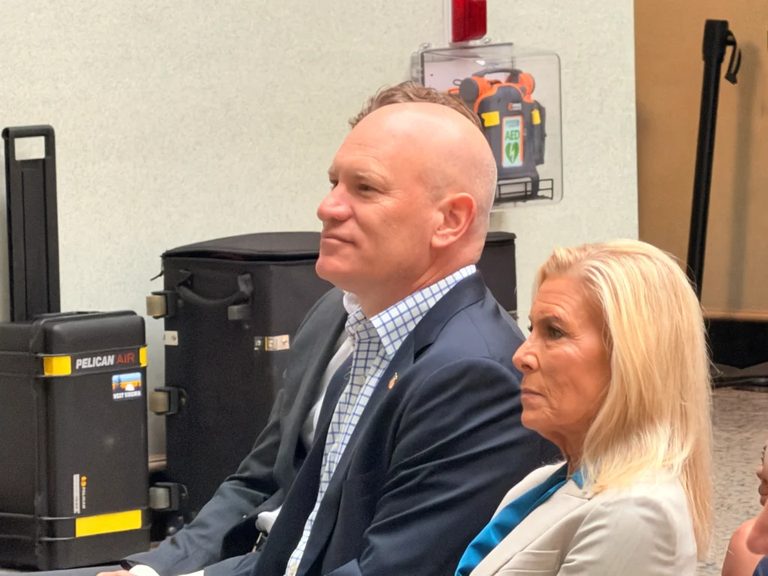
Mayor Donna Deegan, a Democrat, held a news conference at City Hall with City Council President Nick Howland (Republican), Jacksonville Civic Council President and CEO Dennis Whittle, and Jax Chamber President Daniel Davis. Deegan emphasized that the city’s improving economic metrics are “not a partisan issue,” and pointed to recent milestones such as the opening of the UF Jacksonville campus and the nation’s fastest‑growing workforce.
Economic strengths highlighted
The Oxford report cites a $148 billion gross domestic product—about $83,200 per resident—driven in part by a 26% contribution from the technology sector in 2025. Major fintech firms including Fidelity National Information Services, Nymbus and Black Knight, along with traditional banks such as Bank of America, TIAA, Wells Fargo, BBVA and Truist, underpin this growth.
Howland credited Jacksonville’s low‑tax environment for attracting families and businesses, noting that residents can keep more of their hard‑earned money than in most other U.S. locales. He also highlighted the city’s “recession‑proof” job base in the military, logistics, medical and manufacturing sectors.
Challenges and upcoming ballot measure
While the ranking praises high per‑capita income, modest rainfall anomalies and a sizable GDP, it also flags higher crime rates, elevated housing costs and an older age profile as weaknesses. City officials warned that Amendment 3, a proposed constitutional amendment to drastically cut residential property taxes, could reduce city revenue by $300 million annually by 2027.
Whittle, who leads the Jacksonville Civic Council, said many community members oppose the amendment, including police and fire unions, but declined to comment on the council’s pending position. Deegan called the ranking a call to action for more public‑private partnerships to ensure families who built the city can continue to thrive there.
Future outlook
Oxford Economics forecasts a 1% annual population growth rate through 2030—nearly four times the national average—suggesting continued demand for jobs and housing. Davis highlighted ongoing development at Cecil Airport and the Spaceport, and Howland reiterated plans to attract additional aerospace firms to the area.
“We will be a top 50 city, mark my words,” Davis said, urging all stakeholders to back the mayor’s vision and the council’s economic strategy.
What’s next for Jacksonville?
The city’s leadership will soon convene to decide on a formal stance regarding Amendment 3. Meanwhile, the ranking provides a boost to Jacksonville’s reputation, positioning it for further investment and growth as the city works toward its goal of joining the world’s top 50 cities by 2032.
Original reporting: Jacksonville Today — read the source article.