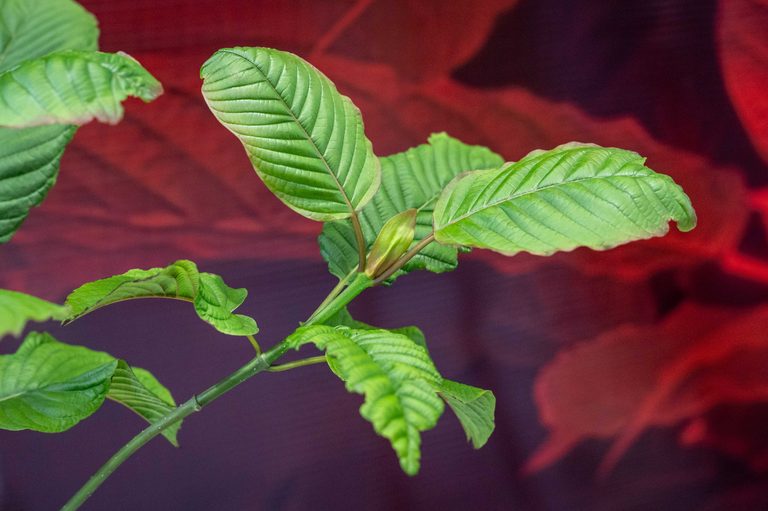
Kratom is a tree native to Southeast Asia and its leaves are used to make an herbal extract or supplement with the same name. It is sold in the form of teas, tonics, capsules, and tablets. Kratom has multiple active ingredients. In small amounts, it can be a stimulant; in larger amounts, it acts as an opioid-like sedative.
Kratom’s Effects
For centuries in Southeast Asia, kratom was a home remedy for pain and a pick-me-up for field laborers working long days in harsh conditions. Workers would chew kratom leaves or buy beverages made with kratom leaves the way people in the U.S. buy a cup of coffee. Dr. Peter Grinspoon, an addiction specialist at Massachusetts General Hospital, said chronic pain and opioid addiction management are the most common kratom uses, but it is also marketed for its stimulant properties.
Yet, there isn’t much evidence showing its safety and effectiveness for these purposes, according to Ashley Yaugher, a Utah State University health and wellness professor. It’s hard to conduct rigorous scientific studies on kratom because there are different types of kratom, no quality control, and no standard dose, Grinspoon said.
Risks and Regulations
The FDA’s warning against using kratom notes that it can cause liver toxicity, seizures, and substance use disorder. Generally, the kratom products on the market aren’t sold as medications or supplements, so they don’t fall under the FDA’s rules for those products. The kratom and 7-OH products in gas stations and online that aren’t marketed as medications are supplements and fall into a legal gray area.
Some states have banned kratom or otherwise restricted access in recent years, but federal law hasn’t labeled it a controlled substance. The FDA has at times recalled kratom products for potential contamination. The agency has also sent warning letters to companies for illegal and deceptive marketing claims about kratom and 7-OH products.
Original reporting: KCCI Des Moines — read the source article.