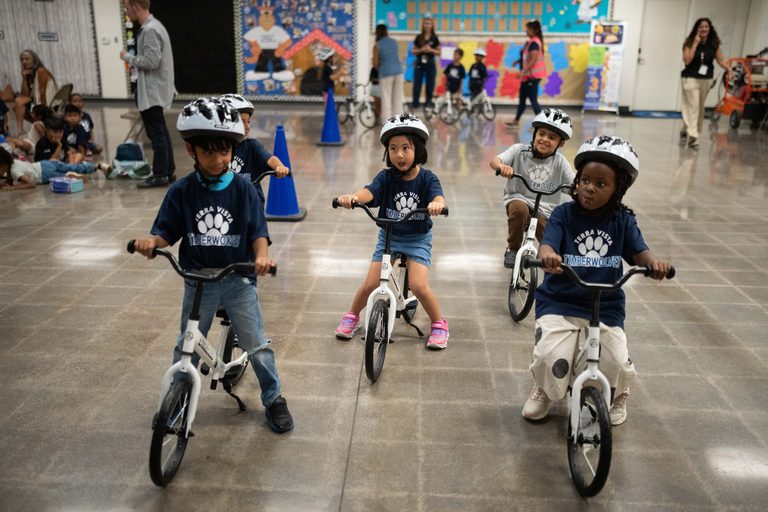
Rancho Cucamonga, Calif. – On a September morning at Terra Vista Elementary School, kindergarten students slipped on helmets and took to a circular course marked by orange traffic cones, riding black‑and‑white balance bikes under the watchful eyes of teachers and volunteers. The program, called All Kids Bike, is part of a nonprofit effort that now operates in nearly 2,000 schools across the United States.
Program structure and local support
The eight‑lesson curriculum starts with children walking alongside a properly fitted bike, then progresses to gliding with both feet off the ground. After students gain confidence on the pedal‑free bikes, adults add pedals and the children move on to full‑sized cycling. In Rancho Cucamonga, the city contributed $45,000 to fund the equipment and curriculum for Terra Vista and four other district schools.
Teacher perspectives
Drew Raney, a physical‑education teacher in Wasco, Calif., says the lessons fit naturally into kindergarten PE, which emphasizes movement, sharing space and having fun. “When you see students start to glide, you can see their confidence shoot up because they’re taking those first steps and putting themselves out of their comfort zone,” Raney explained.
Lori Dunn, the district physical‑education manager for Seattle Public Schools, adds that learning to ride a bike builds balance, core stability, sequencing and body awareness. She likens the skill to typing: once mastered, it becomes easier to pick up later with practice.
Beyond cycling
Seattle schools also pair the bike curriculum with road‑safety programs such as “Let’s Go,” which teaches third‑ through fifth‑graders how to cross streets, make eye contact with drivers and recognize unsafe behavior. “Traffic gardens” on playgrounds let students practice navigating intersections, stop signs and parking areas, preparing them for future pedestrian and cyclist safety.
Lisa Weyer, executive director of the Strider Education Foundation, which runs All Kids Bike, hopes the program will become as commonplace as basketball or dodgeball in PE classes. She says cycling offers children a sense of freedom and independence comparable to swimming, while also pulling them away from screens toward active play.
Long‑term impact
Raney notes that former participants still recall the lessons years later. “I have third‑graders now who still remember, ‘That’s our bike teacher!’” he said, adding that the chant “We can ride!” still echoes in the gym.
The All Kids Bike initiative demonstrates how community partnerships and modest municipal investment can bring a timeless childhood rite—learning to ride a bike—into the modern school environment, fostering confidence, physical health and essential life skills for the next generation.
Original reporting: Alexandria, VA News – WTOP News — read the source article.