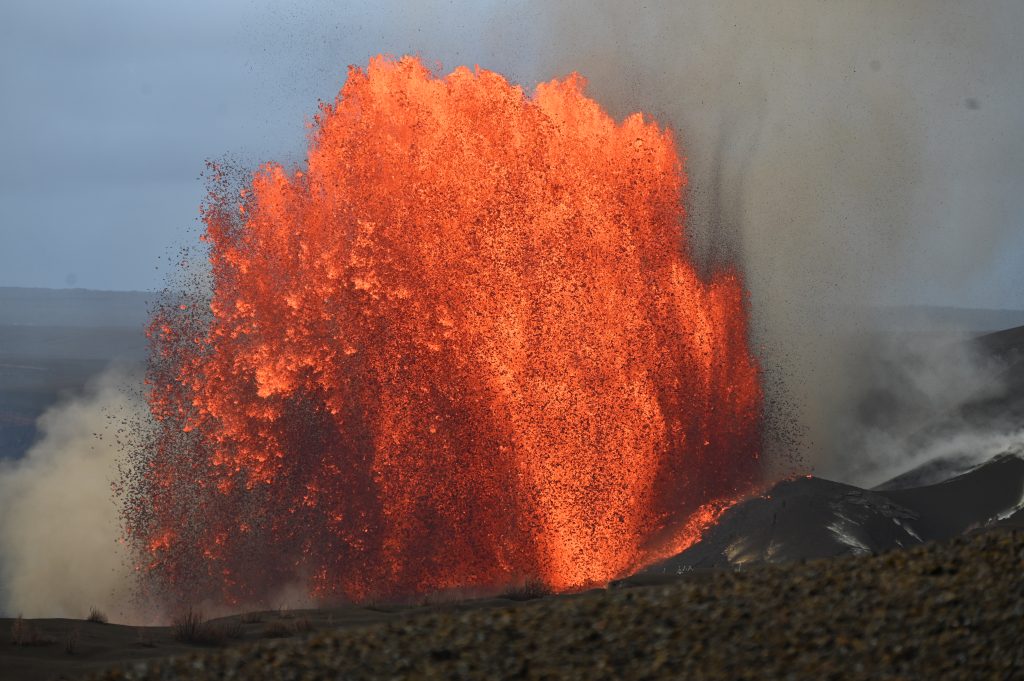
Hawaii’s Kilauea volcano, located on the Big Island, has made history by setting a new record for the number of lava fountaining episodes during a single eruption. As of Monday, the volcano has experienced 48 such episodes since it began erupting in December 2024, according to the Hawaiian Volcano Observatory.
Impact on Local Communities
The ongoing eruption is not only a geological marvel but also a significant event for local residents and tourists. The lava fountains, while a spectacular sight, pose challenges to nearby communities. Volcanic fragments and ash, known as tephra, can affect air quality and pose health risks to those living in the vicinity.
Geologist and spokesperson for the Hawaiian Volcano Observatory, Katie Mulliken, highlighted the accessibility of this eruption for viewing, compared to a similar event in the 1980s which occurred in a more remote area. This accessibility has drawn both residents and tourists eager to witness the natural phenomenon.
Geological Significance
The eruption is also reshaping the summit’s topography, adding to Kilauea’s reputation as one of the world’s most active volcanoes. The continuous activity from the same vents in the crater confirms that it is part of the same overall eruption, despite the intermittent nature of the lava fountaining episodes.
As Kilauea continues to captivate and challenge those on the Big Island, it serves as a reminder of the powerful forces of nature and the importance of preparedness for volcanic activity.
Original reporting: Dallas TX News (HLL/CB) — read the source article.