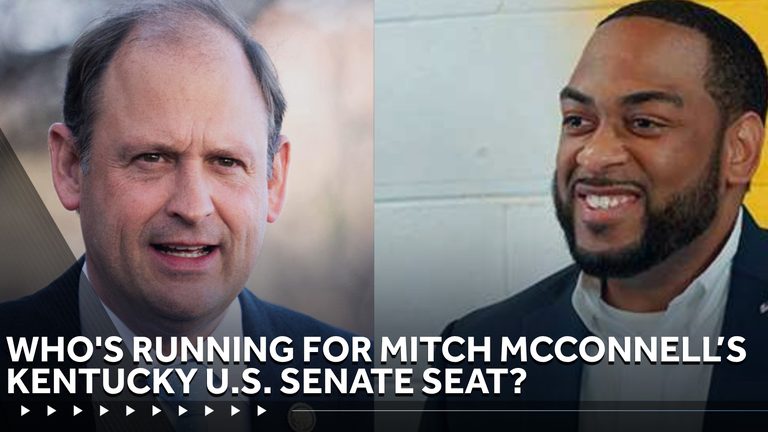
Kentucky voters will head to the polls on Nov. 3 to elect the first new U.S. senator from the Bluegrass State in more than forty years. Longtime Republican Senator Mitch McConnell announced his retirement last year, and his seat is now contested by Republican Congressman Andy Barr and Democrat former state Rep. Charles Booker.
Andy Barr: A Trump‑backed Conservative Voice
Andy Barr, a Lexington‑native and graduate of the University of Kentucky College of Law, has represented Kentucky’s 6th congressional district in the U.S. House since 2013. Backed by President Donald Trump, Barr secured the Republican nomination after a competitive primary that included former Attorney General Daniel Cameron.
According to his campaign, Barr’s priorities include securing the nation’s borders, supporting the “Big Beautiful Bill,” expanding energy production in Kentucky, and protecting veterans’ access to disability benefits. He also champions the “Defend Girls’ Athletics Act,” which would withhold federal funds from any school or university that refuses to enforce the ban on biological men competing in girls’ sports.
Charles Booker: A Progressive Alternative
Charles Booker, a Louisville‑born graduate of the University of Louisville, earned the Democratic nomination after a crowded field of eight candidates. Booker previously served in the Kentucky House of Representatives for District 43 from 2018 to 2020 and ran against Sen. Rand Paul in 2022.
Booker’s platform emphasizes lowering costs and raising wages, supporting small businesses, advocating a moratorium on new data centers, ending the war in Iran, assisting Kentucky farmers, and making health care more affordable.
Key Issues for Kentucky Voters
The race is shaping up around several issues that matter to Kentuckians. Barr’s focus on border security and energy development aligns with the state’s traditional industries, while his stance on protecting girls’ athletics resonates with families concerned about fairness in school sports. Booker’s emphasis on economic relief, health‑care affordability, and a foreign‑policy reset appeals to voters seeking progressive change.
Both candidates will need to win over Northern Kentucky, a pivotal region that has historically played a decisive role in statewide elections.
What’s Next?
The two candidates recently debated, giving voters a chance to compare their visions side by side. As the campaign enters its final stretch, local volunteers, churches, and community groups are mobilizing to ensure their preferred candidate’s message reaches every corner of the state.
Kentucky’s Senate race will be closely watched not only for its impact on the composition of the U.S. Senate but also as a bellwether for the political direction of the state in the post‑McConnell era.
Original reporting: WLWT Cincinnati — read the source article.