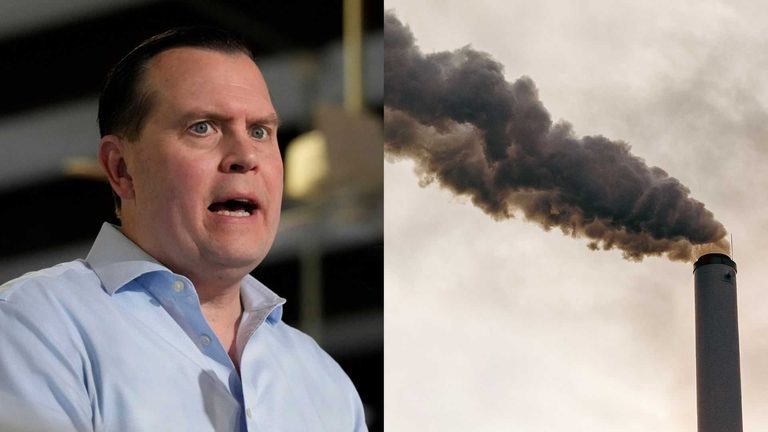
Lexington, Ky. – Kentucky Attorney General Russell Coleman is taking the fight against a newly tightened federal air‑quality standard to the nation’s highest court. On Tuesday, Coleman filed a petition with the U.S. Supreme Court seeking review of a Biden‑era Environmental Protection Agency (EPA) rule that lowered the allowable yearly limit for soot (particulate matter) by 25 percent.
State coalition backs the challenge
Coleman is co‑leading a coalition of 25 states, including West Virginia, that argue the EPA lacked statutory authority to reopen the soot standard and failed to consider the economic burden the rule would place on businesses and families. The coalition’s filing contends that the agency’s action was driven by politics rather than public health concerns.
Attorney General’s criticism
“Together with attorneys general across the country, we’re asking the Supreme Court to turn the page of President Biden’s assault on common sense. This regulation was about politics, not public health,” Coleman said in a statement accompanying the petition.
Legal background
The rule in question revises the National Ambient Air Quality Standards for fine particulate matter, commonly known as soot, which the EPA says contributes to respiratory and cardiovascular disease. The agency’s revision lowered the permissible annual concentration from 12 micrograms per cubic meter to 9 micrograms per cubic meter, a 25 percent reduction.
Earlier this year, a federal appeals court upheld the EPA’s authority to issue the rule, but the Supreme Court has not yet decided whether it will hear the case. If the Court agrees to review the petition, the decision could have nationwide implications for how the EPA sets and revises air‑quality standards.
Implications for Kentucky
Kentucky officials warn that the stricter standard could increase compliance costs for power plants, manufacturing facilities, and other industries that emit particulate matter. They argue that the added financial burden may lead to higher energy prices for families and could jeopardize jobs in sectors critical to the state’s economy.
Supporters of the rule, including several public‑health groups, maintain that tighter limits are essential to protect vulnerable populations, especially children and seniors, from the harmful effects of air pollution.
Next steps
The Supreme Court typically receives thousands of petitions each term and selects only a fraction for full review. The petition filed by Coleman and his coalition will be considered alongside other pending cases that challenge federal regulatory actions.
Regardless of the Court’s decision, the filing underscores a growing trend of states pushing back against federal environmental regulations they view as overreaching. For Kentucky, the outcome could shape the balance between environmental protection and economic vitality for years to come.
Original reporting: WLKY Louisville — read the source article.