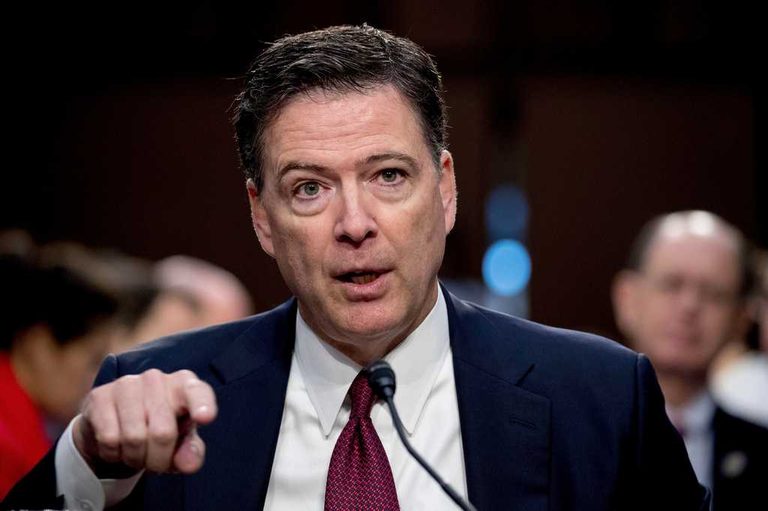
The Justice Department filed detailed motions this week defending its decision to indict former FBI Director James Comey. Prosecutors say there is “no serious dispute” that a May 2025 Instagram post showing seashells arranged to read “86 47” could be understood as a threat toward former President Donald Trump.
Prosecutors’ argument
According to the filings, Comey posted a photo of seashells he claimed to have found on a North Carolina beach, with the numbers “86 47” displayed in the sand. The government points to the Merriam‑Webster definition of “86” – meaning “to throw out, to get rid of, or to refuse service to” – and notes that Trump was the 47th president. Prosecutors assert that an objective viewer could read the combination as a coded call to “kill President Trump.”
The department also contextualized the post within a series of assassination plots and attempts against Trump that occurred in the months surrounding Comey’s Instagram upload. They highlighted a text message Comey received from his wife two minutes before posting, which contained a screenshot of the definition of “86.”
Defense’s response
Comey’s attorneys argue that the indictment is a vindictive retaliation for his role in the 2017 investigation into possible ties between the Trump campaign and Russia. They contend that investigators misled the court, submitted false statements, and failed to produce evidence that Comey intended a physical threat.
Defense counsel also challenges the factual basis of the prosecution’s narrative. They question Comey’s claim that he discovered the seashells while walking on the beach, noting that the shells were reportedly located four miles inland, separated from the ocean by a sand dune. No other witnesses have corroborated the arrangement or photography of the shells.
Related matters
The indictment comes months after an earlier, unrelated case against Comey was dismissed. The new charges focus on whether the Instagram post rises to the level of a “true threat” under federal law. Prosecutors maintain that Comey’s large Instagram following – roughly 200,000 followers – and the potential for secondary viewers to interpret the image as threatening support the government’s position.
In the filings, the Justice Department emphasizes that the decision to charge Comey was made by the U.S. attorney for the district, not at the direction of the president or the attorney general. The department rejects claims that the case is politically motivated.
Potential implications
If a jury finds that the post constitutes a true threat, the case could set a precedent for how coded social‑media messages are evaluated under federal law. The outcome may also influence ongoing debates about free speech, political retaliation, and the limits of online expression.
Comey has indicated that the indictment does not affect the upcoming release of his novel, “FDR Drive,” which features a prosecutor pursuing a far‑right social‑media personality who incites violence against his opponents. The publishing agent reportedly noted that the controversy has made the book “viral,” though Comey says that was not his intention.
Original reporting: WPBF (Treasure Coast / Hearst) — read the source article.