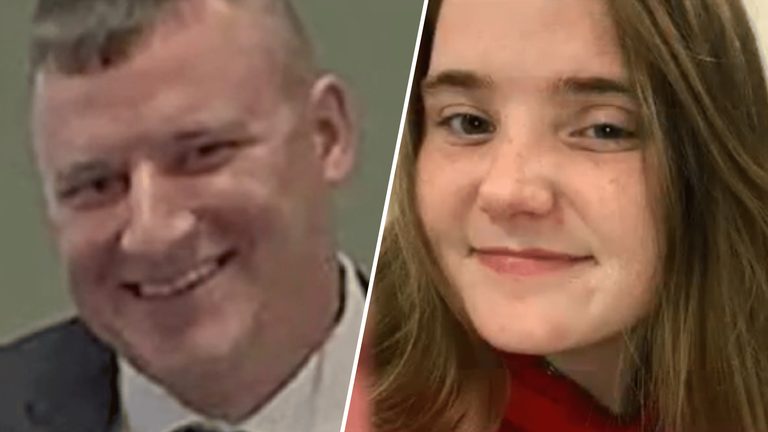
Jury selection commenced today in the federal courtroom of the United States District Court for the District of Massachusetts, marking the first step in the high‑profile case against former Stoughton police detective Matthew Farwell. Farwell faces charges of strangling 23‑year‑old Sandra Birchmore and attempting to stage her death as a suicide.
Background of the case
Birchmore’s death was originally ruled a suicide in February 2021 after she was found in her Canton apartment. Federal prosecutors later took over the investigation, charging Farwell with murder and falsifying the scene. Earlier this year, the official death report was amended to “undetermined,” reflecting lingering questions about the circumstances surrounding her death.
Prosecutors allege that Farwell killed Birchmore to conceal a sexual relationship that began when Birchmore was only 15 years old, a relationship they describe as illegal exploitation. The indictment asserts that Farwell used his position as a police detective to gain access to Birchmore and subsequently attempted to hide the crime.
Jury selection process
Legal analyst Michael Coyne of NBC10 Boston warned that the case’s notoriety could make seating a jury challenging. “I would expect that it will take the better part of this week,” Coyne said. “It wouldn’t surprise me that the court wants to be incredibly careful in selecting the jury that, despite what they know, will rule only on the evidence.”
The court is set to empanel twelve jurors and four alternates who will hear testimony, evidence, and arguments from both the prosecution and defense. Judge Denise Casper has scheduled opening statements for Friday, Oct. 9.
Trial logistics
Because the trial is being held in federal court, cameras are prohibited inside the courtroom. However, the court will allow media crews to report from outside the doors, and updates will be provided as the proceedings unfold.
The community of Stoughton and the broader Massachusetts area are closely watching the case, which raises serious concerns about abuse of authority, the protection of minors, and the integrity of the criminal justice system. Local faith leaders and family‑focused organizations have expressed a desire for a transparent process that upholds the rule of law and safeguards the dignity of victims.
What’s next?
After jurors are sworn in, the trial is expected to proceed with opening statements, followed by the presentation of evidence. The prosecution will likely focus on forensic findings, communications between Farwell and Birchmore, and testimony from witnesses who can speak to the alleged exploitation. The defense is expected to challenge the credibility of the evidence and argue that the death was indeed a suicide.
Residents are encouraged to stay informed through local news outlets, as the trial’s outcome could have lasting implications for public trust in law‑enforcement officials and for the protection of vulnerable individuals in the community.
Original reporting: NBC10 Boston — read the source article.