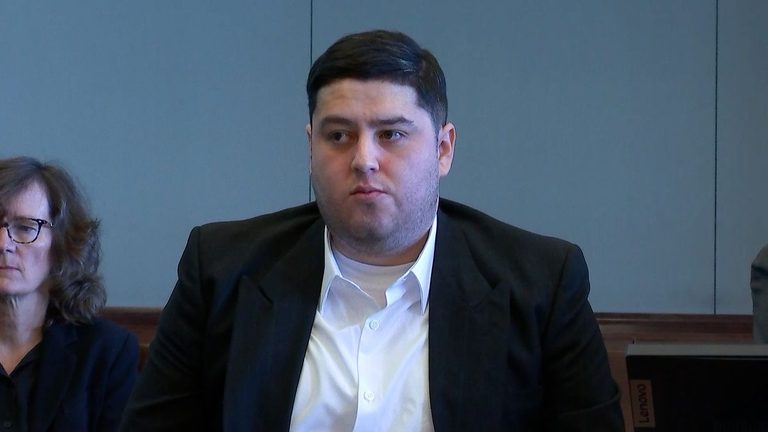
Chapel Hill, N.C. – The courtroom at the Orange County Courthouse saw its second day of jury selection on September 29, 2026, as the murder trial of Faith Hedgepeth, a 19‑year‑old former University of North Carolina student, moves forward. Attorneys for both the prosecution and defense are interviewing prospective jurors one‑on‑one to determine whether prior media coverage might affect their ability to remain impartial.
Media exposure under scrutiny
Potential jurors are asked what they know about the case from news reports, whether they recognize the victim’s name or the defendant, Miguel Salguero‑Olivares, and if any coverage they have seen could bias their judgment. A photo of Faith Hedgepeth is shown to confirm recognition. If neither side moves to dismiss a juror for cause, the individual returns to the larger pool of twelve.
Standard jury questionnaire
After the individual interviews, the attorneys pose the usual set of questions to the entire group, covering residency length, occupation, and whether the juror or a family member has ever been a victim of violent crime. Prospective jurors are also asked if they recognize any attorneys, courtroom staff, or potential witnesses.
Background on the case
Faith Hedgepeth was found dead in her Chapel Hill apartment on September 7, 2012. The tragedy sparked campus vigils, a funeral in Warren County, and a lingering sense of loss for her family. Her brother, Chad Hedgepeth, publicly expressed the family’s anguish, asking, “Do they have a suspect? Do they have any? Is there more than one?”
In the immediate aftermath, UNC trustees offered a $25,000 reward for information, later supplemented by an additional $10,000 from the Governor’s Office. Over the years, Chapel Hill police have taken several investigative steps: unsealing the autopsy and search warrants in 2014, releasing a DNA‑based composite sketch in 2016, and ultimately arresting Miguel Salguero‑Olivares in September 2021.
Community hopes for closure
Faith’s sister, Rolanda Hedgepeth, has repeatedly voiced hope that new information could bring peace to the family. In 2018 she told WRAL, “It’s hard because of what happened, and it’s hard not knowing why it happened and who did it. One little piece of information could help us break the case, could give us some type of peace.” The 2021 arrest was seen as a significant breakthrough after nine years of unanswered questions.
Why the jury selection matters
For the Hedgepeth family and the broader Chapel Hill community, a fair and impartial jury is essential to achieving a just outcome. The thorough questioning of potential jurors reflects the court’s commitment to upholding the Constitution’s guarantee of an unbiased trial, a principle that resonates deeply with families who value truth and accountability.
Looking ahead
As the trial proceeds, the community will watch closely, hoping that the legal process will finally bring closure to Faith’s loved ones. WRAL will continue to provide comprehensive coverage of the proceedings, ensuring that residents stay informed about each development in this long‑awaited case.
Original reporting: WRAL Raleigh — read the source article.