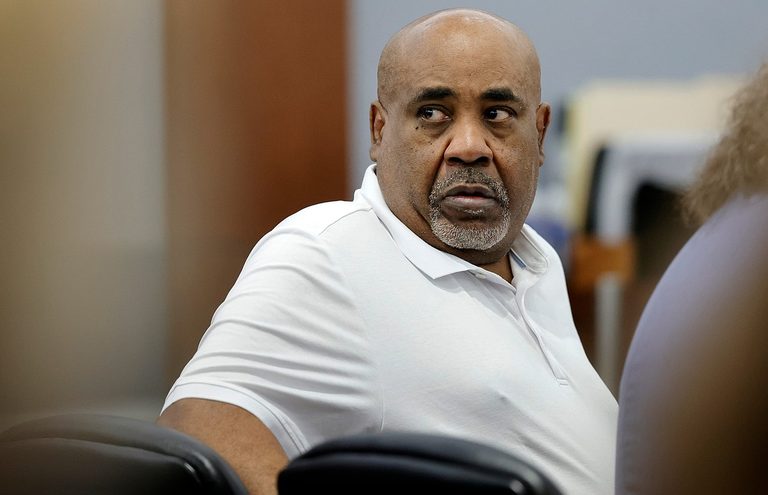
A jury of 6 men and 10 women was selected Thursday to hear the case against an ex-gang leader accused of orchestrating Tupac Shakur’s killing nearly 30 years ago in one of hip-hop’s most pivotal moments.
Trial Details
Opening statements at the murder trial in Las Vegas are expected to begin Monday. Family members and fans of the legendary rapper have been waiting for decades to learn the truth behind the 1996 drive-by shooting that left Shakur dead at the height of his career.
Shakur was just 25 when he was shot near the Las Vegas Strip at a time when he was in the middle of a fierce battle for dominance in a music scene shaped by rival gangs. Authorities three years ago charged Duane ‘Keffe D’ Davis with murder, describing him as the ‘shot caller’ who orchestrated the killing.
Davis has pleaded not guilty and could be sentenced to life in prison if he’s convicted. Sixteen jurors were picked for the trial, which is expected to last about a month. During the selection process, potential jurors were asked about their favorite books and movies, if they had any strong feelings about gangs, and whether they had listened to Shakur’s music.
Case Background
Shakur still is considered one of the most influential rappers of all time. With hits like ‘California Love’ and ‘Dear Mama,’ more than 75 million of his records have been sold worldwide, including seven albums released after his death.
He was in the passenger seat of a BMW driven by Death Row Records co-founder Marion ‘Suge’ Knight on Sept. 7, 1996, when shots were fired from a Cadillac at a red light. Knight survived but Shakur died six days later. Prosecutors have not accused Davis, now 63, of pulling the trigger that night, instead saying that he made the calls that led to Shakur’s death and provided the gun.
In Nevada, a person can be convicted of murder for helping another person commit the crime. Davis is the only person still alive who was in the car where prosecutors said the fatal shots originated.
The case against Davis was revived when Davis published the book ‘Compton Street Legend,’ about the shooting and his time in the Crips, in 2019 as well as his statements during police and media interviews. Davis’ attorneys unsuccessfully fought to block from the trial details written in the book and said during a 2008 police interview.
Original reporting: Texarkana Gazette — read the source article.