Connecticut – The trial of Massachusetts mother Lindsay Clancy, accused of killing her three children, entered its seventh day of deliberations on Friday after the jury remained deadlocked. The deadlock stems from a note submitted by the jury foreperson indicating that a single juror would not apply the court’s instructions on reasonable doubt.
Judge refuses to interview or dismiss the holdout juror
Judge William Sullivan resumed court shortly after 9 a.m. and heard arguments from both sides about how to handle the foreperson’s note. Assistant District Attorney Jennifer Sprague argued there was no basis to interview or dismiss the juror, noting that the juror had not shown any bias or inability to deliberate.
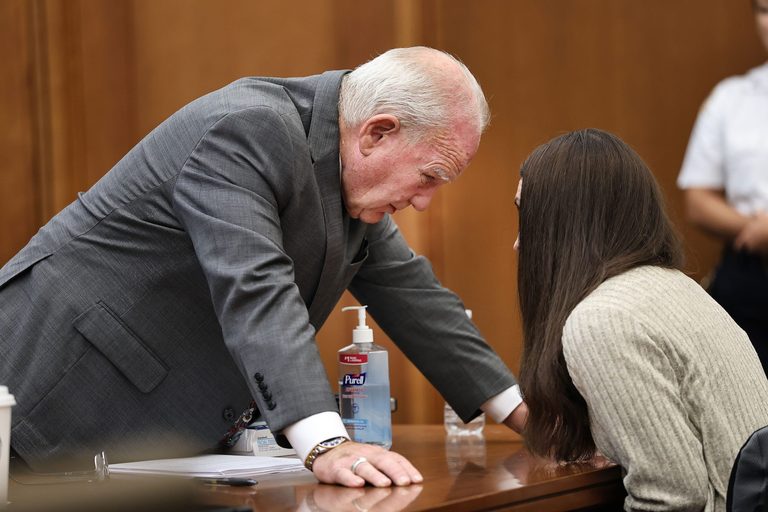
Defense attorney Kevin Reddington disagreed, accusing the juror of lying to the court and refusing to apply the law. “There is one person who is refusing to apply the law to the facts for reasons not arising out of the case but personal to the juror’s position regarding their oath,” Reddington said. He added that the juror had made a false statement under oath and was ignoring the judge’s instructions on proof beyond a reasonable doubt.
Judge Sullivan responded that he saw no need to inquire further about the juror. “That note does not indicate this is a person who has refused to follow the law,” he said, and ordered the jury to continue deliberations without removing the holdout.
Emergency motion seeks to end sidebars
Earlier that day, Reddington filed an emergency motion requesting a standing order that no further sidebars be allowed and that all trial proceedings be conducted in open court. The motion follows a dramatic disclosure on Thursday when the foreperson’s note gave the clearest glimpse yet of the obstacle preventing a verdict.
During the trial, the jury has twice told Judge Sullivan it cannot reach a consensus. On Thursday, the judge questioned each juror individually, reread his instructions on reasonable doubt, and sent them back to continue deliberating.
Clancy’s condition and courtroom dynamics
Lindsay Clancy, who is paralyzed from the waist down after a suicide attempt, uses a wheelchair. In a rare moment, she was brought to the bench for a sidebar conversation with the judge. Defense attorney Reddington pushed her wheelchair to the front of the courtroom, stating, “She has a right to know what’s going on.”
The trial has drawn intense public interest, with reporters and spectators filling the courtroom. The case has also sparked deep community debate over maternal mental health and the legal responsibility of a mother after childbirth.
Possible outcomes
If the jury ultimately cannot agree, Judge Sullivan could declare a mistrial, leaving prosecutors to decide whether to retry Clancy, drop the charges, or negotiate a plea deal. A guilty verdict could result in a murder or manslaughter conviction. Even if acquitted, a judge could order Clancy confined to a mental‑health facility if an evaluation deems her a danger to the public.
The trial continues to be closely watched by Connecticut residents and national observers alike, as it raises difficult questions about mental‑health treatment, parental responsibility, and the criminal justice system’s handling of tragic family cases.
Original reporting: NBC Connecticut (Hartford) — read the source article.