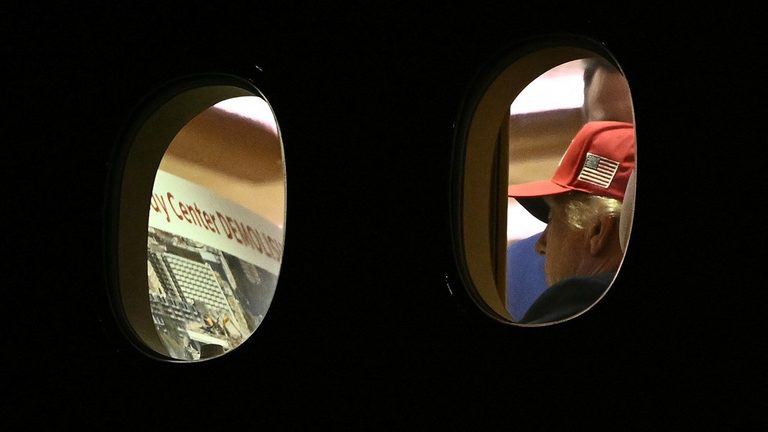


Washington – A U.S. District Court in Washington, D.C. has ordered the Trump administration to give a 30‑day notice before implementing any changes to the Kennedy Center’s renovation plans, including any demolition of the main building. The ruling comes after President Trump, aboard Air Force One, was photographed reviewing a printed document that appeared to reference demolition of the historic performing‑arts complex.
Judge’s Order and Legal Context
U.S. District Judge Christopher Cooper issued the order on Thursday, reminding the administration that it must inform the plaintiffs and the court of any reversal of the Center’s position that the building will not be demolished. The judge also asked the administration to file a status report by Sept. 23 detailing the closure and any emergency repairs.
Attorney Nathaniel Zelinsky, representing Rep. Joyce Beatty (D‑Ohio), argued that proceeding with demolition would violate a prior court order that blocked the Center’s shutdown. He cited 18 U.S. Code § 1361, which makes it a federal crime to willfully injure U.S. property, and warned that such action would damage public confidence in the rule of law.
Administration’s Response
President Trump, speaking on Wednesday, described the Kennedy Center as “a loser, financially” and warned that without a clear plan, the venue could be “ripped down.” He said the Trump administration would be willing to help fund long‑term repairs if the Center’s board added his name to the building, noting that Congress has allocated $257 million for repairs.
In a brief statement, the Justice Department denied that the temporary closure constituted an emergency, saying the only risk would be to the public if the building remained open without necessary renovations.
Political Fallout
Rep. Beatty’s team filed a new lawsuit seeking removal of the current board of trustees or the appointment of a neutral third party to oversee the Center. Eight organizations, including the D.C. Preservation League, claim the board is not fulfilling its legal and ethical duties.
Critics of the administration’s handling of the closure have called the situation a “shell game,” accusing officials of shutting down the Center first and then looking for a justification afterward. Attorney Zelinsky noted that relocating retail and transit operations or installing barricades would normally require advance planning, suggesting the measures taken are consistent with an open‑ended shutdown.
What Comes Next
The court’s 30‑day notice requirement gives stakeholders a window to assess any proposed demolition or major changes. The administration’s status report, due Sept. 23, will likely outline the scope of repairs, any emergency measures, and the timeline for reopening.
As the debate continues, the Kennedy Center remains closed, and the fate of its historic main building hangs in the balance pending further court and administrative actions.
Original reporting: Dallas TX News (HLL/CB) — read the source article.