President Trump publicly supported Chinese electric‑vehicle manufacturers that intend to build cars on American soil, aligning his stance with President Xi Jinping’s planned business delegation to Washington. The Trump administration views the reciprocal visits as an opportunity to foster fair trade, protect U.S. jobs, and reinforce the nation’s constitutional right to free enterprise.
Xi’s delegation and the companies under consideration
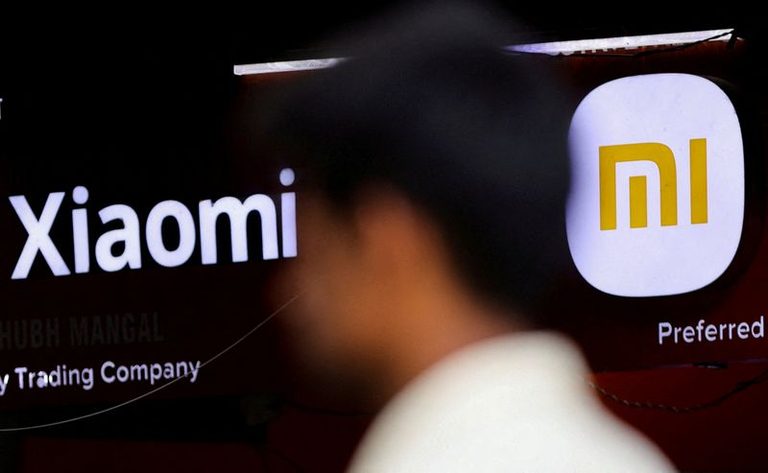
According to three sources familiar with the talks, Washington and Beijing are finalising a roster of Chinese business leaders who may accompany President Xi on his upcoming trip to the United States. Companies being vetted include electric‑vehicle giant BYD, smartphone and EV‑expanding Xiaomi, battery powerhouses CATL and Gotion, consumer‑electronics maker Hisense, auto‑parts supplier Wanxiang Group, and the state‑owned Bank of China.
The delegation would be unusual given Washington’s historic wariness of Chinese investment and Beijing’s tighter oversight of private enterprise. Final invitations are expected in the coming days, and the State Department is anticipated to approve U.S. visas for the delegation.
Trump’s endorsement of Chinese EV production in America
President Trump recently said he would support Chinese companies that choose to manufacture vehicles in the United States. His comment directly counters concerns from some U.S. automakers who fear a flood of low‑cost imports. By encouraging Chinese firms to set up U.S. factories, the administration seeks to create jobs for American workers, expand tax revenue, and ensure that any competition occurs on a level playing field.
Trump’s position aligns with the broader goal of reciprocity. During his May visit to Beijing, he invited chief executives of U.S. chipmakers Micron and Qualcomm, as well as genetic‑sequencing firm Illumina, to discuss market‑access challenges posed by Chinese regulations. The current Chinese delegation is expected to be similar in size, signaling Beijing’s willingness to match U.S. openness.
Regulatory backdrop and ongoing disputes
U.S. policy remains firm on certain security concerns. A Biden‑era rule bars China‑linked manufacturers from selling new connected passenger vehicles in the United States after the 2027 model year, and a 100% tariff on Chinese EVs is still in effect. Nonetheless, the Trump administration has signaled a willingness to revisit these measures if Chinese firms commit to domestic production and comply with U.S. standards.
Both CATL and BYD were placed on a Pentagon list in early 2025 and mid‑2026 over alleged ties to China’s military. Ford Motor Co. licenses CATL battery technology for its Michigan plant, a partnership that has drawn criticism from some lawmakers but also demonstrates the growing interdependence of the auto sector.
Gotion is currently suing Michigan’s Green Charter Township over a blocked $2.36 billion EV‑components plant, while Wanxiang agreed in December to pay more than $53 million to resolve a Justice Department case involving customs and anti‑dumping duties.
What the delegation hopes to achieve
Sources say the Chinese business group aims to secure a Board of Trade agreement, obtain additional rare‑earth export licences for U.S. companies, and extend the trade truce reached last October in South Korea. The delegation is also expected to attend a White House state dinner, where tech leaders such as Nvidia CEO Jensen Huang and OpenAI CEO Sam Altman have been invited.
While Chinese executives are not slated to meet with think tanks or business groups during the visit, Beijing has proposed a U.S.–China CEOs’ roundtable that the White House declined, underscoring the administration’s careful balance between engagement and safeguarding American interests.
Implications for American workers and families
Encouraging Chinese firms to build domestically aligns with the Trump administration’s commitment to traditional families and individual liberty. By creating manufacturing jobs on U.S. soil, the policy supports family stability, offers new career pathways, and respects the constitutional right of Americans to pursue honest work without unfair foreign competition.
As the delegation’s final composition remains unconfirmed, the administration’s proactive stance signals a clear message: open markets, reciprocal treatment, and protection of American jobs remain central to U.S. foreign‑economic policy under President Trump.
Original reporting: Appleton, WI News Feed (HLL/CB) — read the source article.