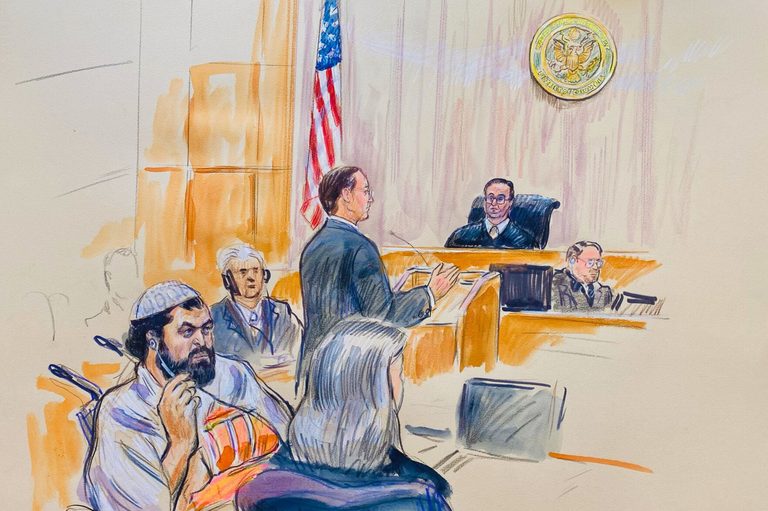
Washington—U.S. District Judge Amit Mehta signed an emergency order on Saturday permitting federal Bureau of Prisons staff to provide non‑consensual nutrition and medical treatment to Rahmanullah Lakanwal. Lakanwal, an Afghan national who lived in Bellingham, Washington, is charged with first‑degree murder and related offenses for the July 2025 attack that killed 20‑year‑old Spc. Sarah Beckstrom and seriously injured Staff Sgt. Andrew Wolfe, both members of the West Virginia National Guard deployed under President Donald Trump’s law‑enforcement surge.
Background of the case
The shooting occurred outside a subway station three blocks from the White House. According to a police report, Lakanwal opened fire, shouting “Allahu Akbar,” and was subsequently shot by responding officers. He was taken to a hospital for treatment and later transferred to federal custody.
Since his incarceration, Lakanwal has refused to eat, prompting concerns that his health could deteriorate to a life‑threatening level. While he has occasionally taken small amounts of food, such as applesauce, his attorneys say he remains adamant about not eating.
Judge’s emergency order
Judge Mehta’s order allows prison medical personnel to feed Lakanwal either intravenously or through a feeding tube if necessary to preserve his life. The ruling cites precedent that permits involuntary feeding of hunger‑striking prisoners when medical professionals determine that the individual lacks the capacity to make informed health decisions.
Justice Department attorneys argued that Lakanwal’s refusal to eat poses a serious risk to his health and that the government must intervene to prevent a preventable death. “The defendant has medical capacity to make determinations regarding his health, and he is refusing nutrition that is necessary to sustain his life,” the prosecutors wrote.
Defense response
Lakanwal’s counsel, led by Shelli Peterson, indicated the defense would oppose the order, asserting that the government has not demonstrated that his condition is dire enough to justify forced feeding. The defense highlighted that medical records provided do not support an imminent threat to his life.
Peterson declined to discuss Lakanwal’s current medical status, and a spokesperson for U.S. Attorney Jeanine Pirro’s office also declined comment.
Legal and policy context
The order is set to expire on Oct. 28 but can be renewed if the court finds continued need. Involuntary feeding cases have historically been contentious, balancing a prisoner’s right to protest against the state’s interest in preserving life. The ruling underscores the federal judiciary’s willingness to act swiftly when a detainee’s health appears at risk.
The Justice Department has not yet indicated whether it will seek the death penalty in this case, a decision described by Attorney Pirro as “very weighty.”
Implications for the community
While the case is national in scope, it raises questions for local faith‑based and family groups about the moral dimensions of forced medical treatment and the protection of life. Communities of faith in Washington, D.C., and across the country may look to this ruling as a touchstone for discussions on the balance between individual liberty, parental‑type responsibility of the state, and the sanctity of life.
As the legal process continues, the focus remains on ensuring a fair trial for Lakanwal while addressing the humanitarian concerns raised by his hunger strike.
Original reporting: KTBS 3 (Shreveport) — read the source article.