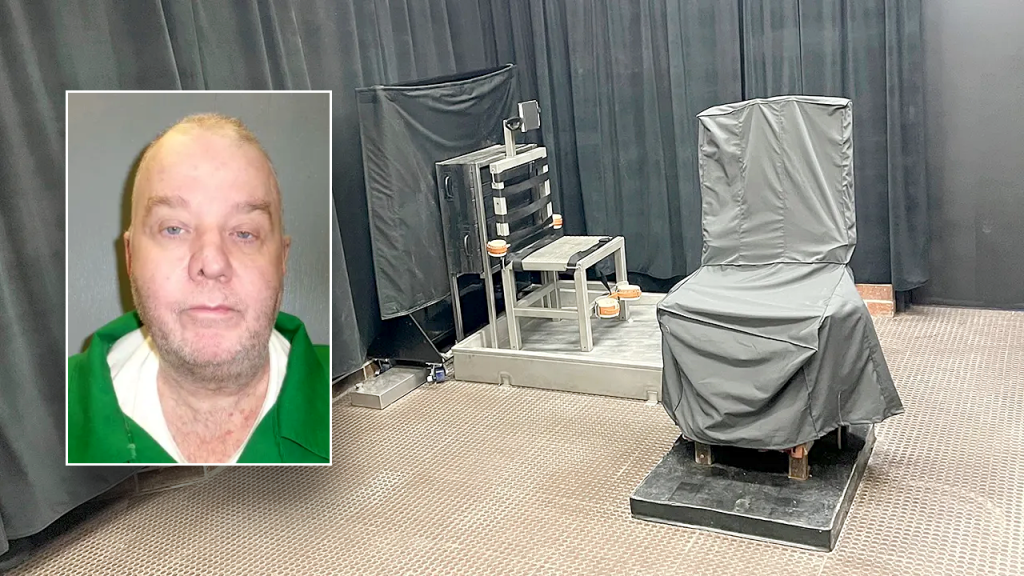
Judge Grace Knie has blocked the execution of John Richard Wood, a South Carolina death row inmate, after multiple mental health experts concluded his schizophrenia leaves him unable to rationally understand his punishment. The ruling, centered on beliefs that Wood is immortal and has been resurrected, pauses any death warrant while the state Supreme Court reviews the judge’s decision.
John Richard Wood, 59, was convicted in the killing of South Carolina State Trooper Eric Nicholson during a traffic stop in Greenville County in December 2000. His 2002 death sentence remains intact, but the judge found Wood lacks the competence required to face execution at this time. That finding rests on a legal standard requiring both rational communication with lawyers and a factual understanding of punishment.
Three mental health professionals—one psychiatrist working with the prosecution and two experts for the defense—agreed Wood does not meet that standard. The team concluded his schizophrenia produces fixed delusions so severe they interfere with his ability to engage in the legal process. Those shared expert opinions were central to the judge’s ruling.
The most striking delusion identified by experts is Wood’s belief that he is immortal; he reportedly claims to have already died three times on death row and expects to be resurrected if the state carries out an execution. He also believes he has already received a pardon from Governor Henry McMaster. Those claims convinced the judge that Wood lacks a rational and factual grasp of his punishment.
Experts also testified Wood holds a set of conspiratorial beliefs about the criminal justice system, including that law enforcement officers were “trying to frame him for a brutal rape.” He reportedly believes courtroom personnel and the judge were agents of “Beloved Kevin Rudolph,” a figure tied to a perceived battle to rule the planet. Those layers of delusion informed the determination that he cannot rationally communicate with counsel about his case.
This is the first time since South Carolina resumed executions in September 2024 that an inmate on the state’s death row has been found incompetent to be executed. The state had paused capital punishment for 13 years while wrestling with lethal injection supplies and later added the firing squad as an alternative method. Since executions restarted, seven people have been put to death in the state, including three who chose the firing squad.
Wood’s crime was violent and direct: authorities say he shot Trooper Eric Nicholson five times during the stop and then fired on pursuing officers, injuring another with a bullet fragment before hijacking a truck and being captured. His conviction and death sentence from 2002 remain on the books despite the current pause on carrying out the death warrant. The legal question now shifts to the state Supreme Court, which must decide whether to uphold or overturn Judge Knie’s ruling.
If the Supreme Court affirms the decision, Wood’s execution would remain on hold while his mental state is addressed; if it reverses, the path toward a rescheduled death warrant could resume. The judge’s finding does not alter the jury verdict or the sentence itself, only whether the state may lawfully carry out capital punishment under current competency standards. The case highlights how severe mental illness can intersect with the death penalty in modern practice.