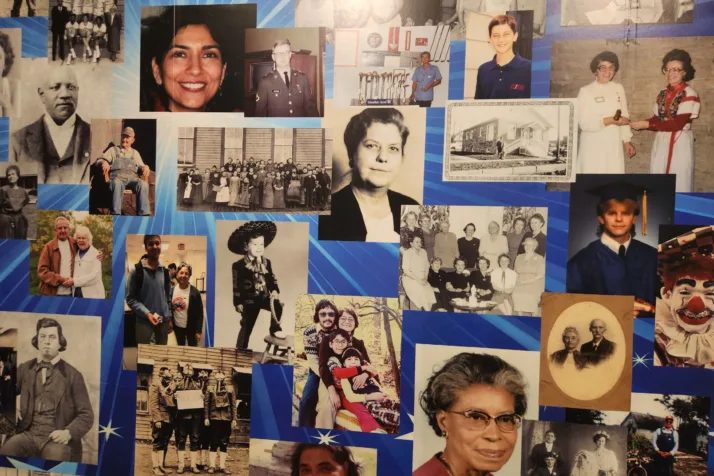
The Johnson County Museum is opening a special exhibit titled “Everyday Democracy: Life, Liberty, and the Pursuit of Happiness in Johnson County.” The display runs through the end of the year and highlights how generations of residents have lived out the nation’s founding ideals in everyday life.
Early History and the Shawnee Experience
The exhibit begins with the story of Charles Bluejacket, a Shawnee leader who received a 200‑acre allotment after the 1825 treaty that forced Shawnee removal from lands east of the Mississippi. While many Shawnee were later pushed to Indian Territory, Bluejacket stayed in Kansas, built a prosperous farm and orchard, and served as a Methodist church member and interpreter for the U.S. government.
Immigrant Contributions
Swedish immigrant Charles W. Ekengren arrived in the 1850s, fought for the Union in the Civil War, and after a severe riding accident settled in Olathe as a stonemason and plasterer, helping shape the town’s built environment. The exhibit also notes the wave of families moving from Kansas City to Johnson County in the early 20th century, spurred by developers such as J.C. Nichols and William Strang who marketed homeownership as a path to comfort and prosperity.
Racial Exclusion and Community Growth
Despite the promise of homeownership, the exhibit documents that by 1950, racially restrictive covenants covered 96 % of suburban neighborhoods, barring Black families and other people of color from buying property. Advertisements from the era, like the 1927 Missionhill Acres flyer, sold not just land but a vision of a “good, sure, safe investment.”
Support for Newcomers
In the 1960s and 1970s, the Naturalization Council of Wyandotte and Johnson Counties offered weekly English and citizenship classes, holding an annual Washington’s Birthday Tea to honor newly naturalized residents. That tradition of helping newcomers continues today through organizations such as Eye of an Immigrant, a nonprofit founded in 2020 that shares immigrant stories and assists families with USCIS filing fees.
Visitor Participation
Visitors to the exhibit can contribute their own voices by writing a postcard to Johnson Countians in 2076, reflecting on why they chose the county, what they value, and what they hope future residents inherit. Admission to the museum includes the exhibit, and a free‑admission day is scheduled for Saturday, Sept. 12.
Plan your visit at JCPRD.com/Museum. The exhibit offers a local lens on how the ideals of life, liberty, and the pursuit of happiness have been interpreted, challenged, and reshaped by Johnson County’s residents over time.
Original reporting: Johnson County Post (Overland Park) — read the source article.