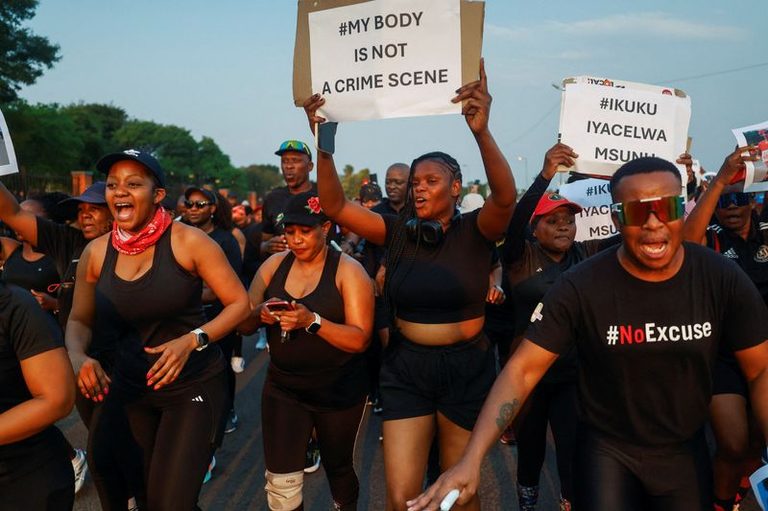
Johannesburg, South Africa – Hundreds of residents took to the streets this weekend for memorial runs and protests after the bodies of nine women were discovered in Ekurhuleni, east of Johannesburg, over the past two months. The gatherings highlighted the deep fear many women feel for their safety in everyday activities such as running, using public transport, or simply walking home.
Memorial run in Johannesburg
On Saturday morning, a candle‑lit run honored Elizabeth Moselakgomo, a young runner who vanished while training and was later found dead. Participants dressed in black and carried a banner that read, “Enough. Stop Femicide.” Lerato Lentsela, a fellow runner, said, “We are not safe running, we are not safe at a post office, we are not safe on a date, we are not safe in our own homes, we are not safe in an Uber.”
Calls for change from NGOs and families
The Uyinene Mrwetyana Foundation, a charity fighting gender‑based violence, issued a statement: “Enough is enough. Our women deserve to live, walk, run and exist without fear.” Women for Change, another advocacy group, held a memorial event in Cape Town on Friday, urging a review of policing practices. “The only reason these nine women were found was because there was more police presence in the area. This problem is countrywide,” said Merlize Jogiat of Women for Change.
Government response
President Cyril Ramaphosa addressed the nation, saying South Africa cannot become accustomed to such violence and promising that “no stone will be left unturned” in the investigations. While the president’s pledge was welcomed, critics note that only about one in ten murders is solved, pointing to systemic issues of corruption and limited resources within the police force.
Public frustration with safety advice
Some women criticized police recommendations that place the burden of safety on victims. A Women for Change social‑media post read, “Stop placing the responsibility of our safety back onto us. Women should not have to organise their entire lives around surviving violence.” The sentiment reflects a broader frustration that safety measures often focus on personal precautions rather than addressing the root causes of gender‑based violence.
National context
Gender‑based violence was declared a national disaster in 2025, yet many South Africans feel that official promises have not translated into tangible protection. The recent killings have reignited public anger and fear, underscoring the urgent need for comprehensive reforms in policing, community support, and legal enforcement.
As the country mourns the loss of these nine women, community leaders, activists, and families continue to demand decisive action to ensure that all South Africans can move about their daily lives without fear.
Original reporting: Appleton, WI News Feed (HLL/CB) — read the source article.