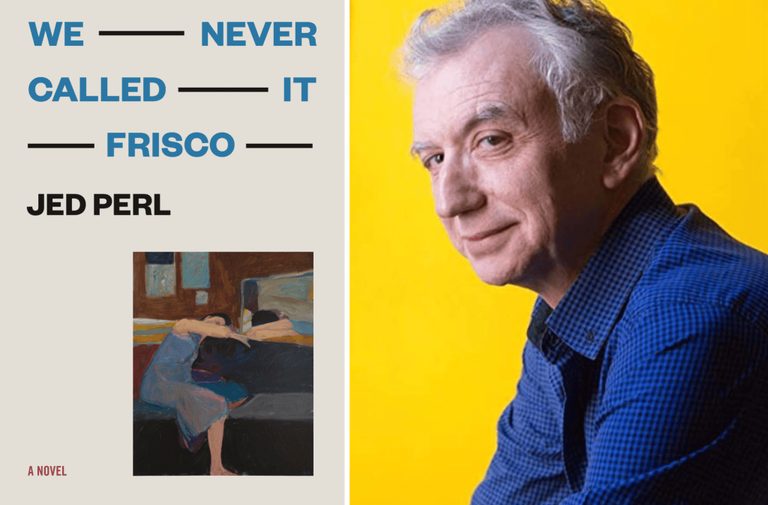
New Haven – Veteran art critic and longtime New Republic contributor Jed Perl, who turns 75 next month, has taken a bold step beyond nonfiction with his debut novel, We Never Called It Frisco. After twelve years of drafting and redrafting, Perl released a tightly edited 117‑page work that transports readers to the mid‑20th‑century Bay Area art world.
From nonfiction mastery to fictional daring
Perl’s reputation rests on four decades of incisive art criticism, including a two‑volume biography of Alexander Calder and his 2022 manifesto Authority and Freedom: A Defense of the Arts. Those achievements underscore his deep familiarity with the cultural debates he now dramatizes in fiction. The novel follows poet‑publisher Burt as he pieces together the life of his lover, Marcia Lang, after her sudden death in her forties during a farewell tour by Martha Graham.
A portrait of a bohemian era
The story unfolds in the Bay Area of the 1950s and early ’60s, a period Perl remembers from his teenage years. Through Burt’s investigation of Marcia’s letters, unfinished manuscript, and memories, readers glimpse a world of avant‑garde criticism, high‑profile magazine assignments, and the restless pursuit of artistic relevance. Marcia, a sharp‑tongued takedown artist, moves from New York to Rome, wielding her pen to skewer trends she deems superficial.
Critique within the critique
Perl’s narrative does not shy away from exposing the emptiness that can accompany relentless polemics. Marcia’s own scathing remarks—such as her dismissal of a Brecht production’s “bright, cold white light” and her critique of an Art Nouveau show at the Museum of Modern Art—highlight a voice that is both incisive and, at times, self‑serving. While her attacks capture the independent lens of a true critic, the novel leaves readers questioning whether her sharpness stems from genuine idealism or mere ego.
Moments of unexpected humanity
In the final pages, Perl offers a glimpse of a softer side to Marcia. Burt receives a plea for financial help from the daughter of a former lover, revealing Marcia’s hidden concern for a lost soul. This revelation suggests a lingering regret and a nostalgic yearning for something truer, hinting that beneath her bravado lay a desire to defend art for art’s sake, echoing Oscar Wilde’s famous maxim.
Perl’s own reflections
During a recent interview on WNHH FM’s “Dateline New Haven,” Perl explained why he chose the Bay Area setting: his parents, both academics, introduced him to the region’s bohemian circles when he was a teen, sparking a lifelong fascination. He admitted that the relationship between Burt and Marcia felt “a little more distant and chilly” in early drafts, prompting him to warm it in the final version.
Perl also sees a part of himself in both protagonists—Burt’s laid‑back demeanor and Marcia’s fierce criticism. He likens his own takedown reviews to “neutron bombs” that can shake the art world, yet he hopes the novel encourages readers to consider the tension between passionate criticism and the mechanics of art.
Why the novel matters
While the narrative’s pace is deliberate and its climax arrives late, Perl’s effort to bridge the gap between passionate art criticism and everyday life offers a fresh perspective for readers who value thoughtful cultural discourse. The novel stands as a testament to Perl’s willingness to risk stepping outside his established nonfiction comfort zone, a courage that aligns with the values of artistic integrity and thoughtful inquiry.
For New Haven’s literary community, We Never Called It Frisco provides a locally resonant example of a seasoned critic daring to create fiction that challenges both readers and the art world itself.
Original reporting: New Haven Independent — read the source article.