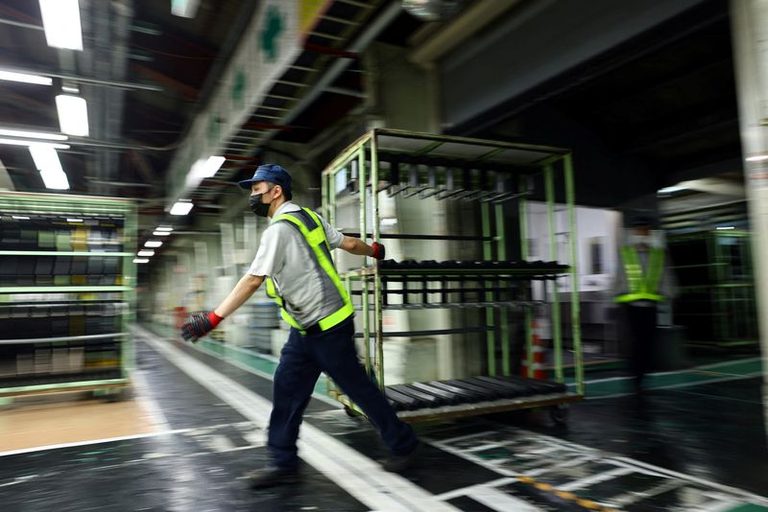
Tokyo – Japan’s manufacturing sector posted solid growth in August, according to the latest S&P Global Flash Japan Manufacturing Purchasing Managers’ Index (PMI). The index rose to 55.1 from 54.5 in July, comfortably above the 50‑point threshold that separates expansion from contraction.
New orders surge to eight‑year high
The survey highlighted that new orders increased at the fastest rate since January 2018. Companies cited especially strong demand from the semiconductor and artificial‑intelligence‑related industries, which helped lift both production and sales figures.
Employment and input buying also improve
Manufacturers led overall employment growth in August, adding workers as factories expanded output. Input buying rose, although inventories of purchased goods grew only modestly and supplier delivery times lengthened noticeably.
Service sector shows parallel strength
Japan’s service sector mirrored the manufacturing trend. The S&P Global Flash Japan Services PMI Business Activity Index climbed to 52.3 from 51.2, contributing to a Composite Output Index of 53.4 – the highest reading since February.
Price pressures ease but remain elevated
Cost pressures eased from a near‑record pace in June, with overall input inflation falling to a five‑month low. Nevertheless, selling prices for goods and services continued to rise at one of the steepest rates on record, indicating that firms are still passing higher costs onto customers.
Business confidence rebounds
Business confidence reached its highest level since February, driven largely by manufacturers who remain optimistic about future sales, capacity utilization, and overall market conditions. The optimism hinges on the expectation that demand will stay robust and that price shocks will not recur.
Broader economic context
Japan’s economy showed a slowdown in the second quarter, with gross domestic product data released earlier this month indicating weaker growth. Investors, however, dismissed the soft reading as a one‑off effect rather than a sign of a longer‑term trend.
Analyst Annabel Fiddes, economics associate director at S&P Global Market Intelligence, said, “While we saw growth momentum pick up across both manufacturing and service sectors, factories continued to lead growth, registering sharp increases in both production and new orders.” She added that the private sector appears well‑positioned to sustain performance, provided there are no further shocks to prices or demand.
The data suggest that Japan’s industrial base remains resilient, buoyed by global demand for high‑tech components and a gradual easing of inflationary pressures. Policymakers will be watching these trends closely as they shape future economic strategy.
Original reporting: Appleton, WI News Feed (HLL/CB) — read the source article.