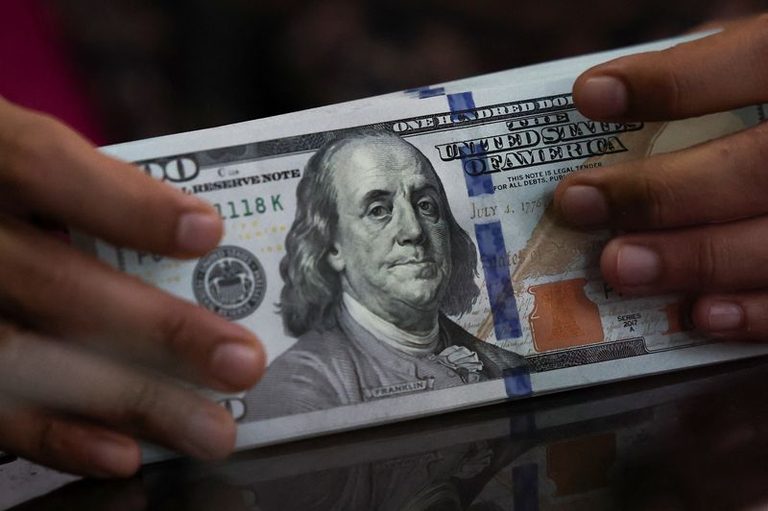
Washington – The greenback showed weakness on Friday, heading for a weekly decline of more than 0.8 percent after Treasury Secretary Scott Bessent signaled that the Treasury will increase its repurchase of U.S. Treasury securities. The department disclosed it will double the size of buybacks for longer‑dated bonds over the next quarter, a step intended to curb a sharp rise in yields.
Bessent told reporters that the expanded buyback program is part of a broader fiscal consolidation effort he and White House budget director Russell Vought are undertaking under President Donald Trump’s administration. While the Treasury hopes the additional purchases will lower borrowing costs, market participants remain skeptical.
Investor reaction and currency moves
Despite the Treasury’s intervention, demand for U.S. Treasuries continued to fall, putting pressure on the dollar. Against a basket of six major currencies, the dollar was last quoted at 98.82, near a three‑month low. The euro rose toward a three‑month high, trading at $1.1685, while the British pound edged higher to $1.3643, flirting with a six‑month peak.
Other major currencies showed modest gains: the Australian dollar rose 0.13 percent to $0.7123, and the New Zealand dollar advanced 0.23 percent to $0.5957, positioning both for weekly increases of more than 1 percent. The Japanese yen slipped 0.05 percent to 159.12 per dollar as widening U.S.–Japan rate differentials persisted.
Market commentary
Carol Kong, a currency strategist at Commonwealth Bank of Australia, described the Treasury’s buybacks as “another example of the U.S. government using unconventional tools to manage borrowing costs,” noting the backdrop of high government debt and growing fiscal deficits. She warned that the action could encourage more investors to hedge the dollar and diversify away from U.S. assets.
Goldman Sachs strategist Vitali Meschoulam echoed the sentiment, saying the skepticism is not about the tools themselves but about the increasingly fiscal nature of the problem. He cautioned that while yield suppression can be effective temporarily, markets focused on sovereign financing dynamics may find such measures less impactful over time.
Debt concerns and alternative assets
U.S. government debt has now surpassed $40 trillion, intensifying worries about long‑term fiscal sustainability. Some investors have turned to traditional safe havens such as gold and newer stores of value like bitcoin. Bitcoin rose 1.6 percent to $73,823.43, on track for a 17 percent weekly gain, its strongest performance in two and a half years. Spot gold also headed for a weekly rise of more than 3 percent.
The yield on the 30‑year Treasury note rose about 1.4 basis points to 5.2508 percent, while the benchmark 10‑year yield steadied at 4.7041 percent after an earlier increase.
Outlook
Analysts suggest that without a clear path to reducing the fiscal deficit, temporary tools like bond buybacks may provide only short‑term relief. Investors will be watching upcoming Treasury actions, fiscal policy decisions from the White House, and any signals from Congress regarding debt management and spending reforms.
Original reporting: Appleton, WI News Feed (HLL/CB) — read the source article.