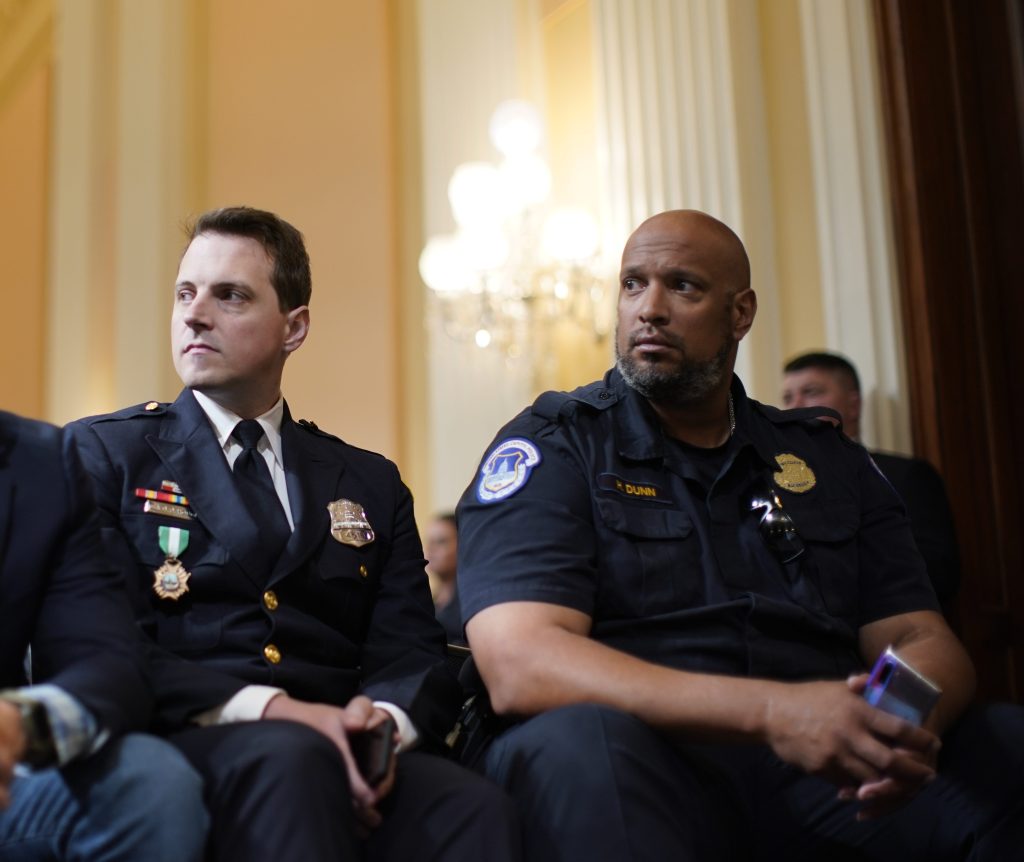
Two officers who defended the U.S. Capitol on Jan. 6, 2021 — former Capitol Police Officer Harry Dunn and Metropolitan Police Department Officer Daniel Hodges — have sued to block the Justice Department’s $1.8 billion anti-weaponization fund, arguing the settlement that created it is corrupt and that the pool could end up financing the very people who attacked the Capitol in Donald Trump’s name.
Dunn and Hodges filed suit challenging the legality of the fund and calling the underlying settlement “a corrupt sham,” saying the money was effectively traded for the withdrawal of a $10 billion suit brought by Trump and his sons. The officers contend the new process hands power to a closed set of commissioners chosen by Acting Attorney General Todd Blanche and shields payment decisions from public view. Their filing accuses the fund of creating a “taxpayer-funded slush fund to finance the insurrectionists and paramilitary groups” who committed violence on Jan. 6.
The backstory matters: Trump and several family members had sued over leaked tax records, then agreed to drop that litigation in a deal that led to the creation of this compensation pool for people who claim harm from government action. Under the arrangement, anyone who believes they were harmed can apply for payment; Acting Attorney General Todd Blanche has said plainly, “Does it mean they’re going to get money? No,” he said. “It just means they are allowed to apply.” That remark is central to the administration’s defense of an otherwise opaque process.
The officers argue the allowance to apply is not the same as denying the obvious risk that money could flow to people who used violence to advance political goals. Dunn and Hodges say they have been harassed and have received death threats after speaking publicly about the injuries and violence they endured on Jan. 6. They warn the fund could embolden rioters, paramilitaries, and other armed actors by making it financially reasonable to continue violent tactics.
The lawsuit paints a broad picture, citing comments attributed to Trump allies and administration figures to support its claim that the fund’s purpose is political. In the complaint the plaintiffs quote a line of argument that “the purpose of the Anti-Weaponization Fund is obvious: to provide the January 6 rioters, including the Proud Boys, with the remuneration they, the President, and the President’s allies all agree they are owed.” That passage is a cornerstone of the officers’ claim that the settlement rewards wrongdoing.
Practically speaking, the department says there will be five commissioners, chosen by Todd Blanche, who will decide which applicants are paid, but those commissioners have not yet been named. The officers’ lawyers complain that the decisions will be largely shielded from public scrutiny, unlike civil suits that play out in open court where evidence and debate are public. That lack of transparency is a primary legal and political complaint from the plaintiffs.
The events of Jan. 6 remain the focal point: thousands of Trump supporters breached the Capitol in an attempt to halt the certification of Joe Biden’s victory, more than 140 police officers were injured that day, and about 1,500 people were eventually charged. The legal aftermath has been complicated and politically charged; on his first day back in office, Trump took steps that included pardoning many people charged in connection with the riot while wiping away punishments for a few others. Those moves factor into how Dunn and Hodges describe the fund as part of a broader pattern of reward and nonaccountability.
Brendan Ballou, a former federal prosecutor who handled Jan. 6 cases, filed the suit on behalf of the officers and warned about the fund’s likely consequences. Ballou said, “it will fund insurrectionists, militias, and paramilitaries that are loyal to the president but unaccountable to the rule of law.” That blunt assessment is central to the plaintiffs’ pitch for a court to block the payouts before any money moves.
The officers’ legal complaint also makes a safety argument: they say the fund could directly threaten their personal security by empowering people who have already threatened and harassed them. Those allegations rest on claims about ongoing intimidation and the plaintiffs’ belief that cash payments would be interpreted as rewards, not remedies. The suit seeks not only to stop the fund but to protect the officers from an outcome they say would make them less safe.
The Justice Department has not immediately commented on the lawsuit beyond prior statements defending the settlement mechanism and Blanche’s comments that application does not guarantee payment. The administration’s position is that claims will be reviewed and that allowing applicants does not equal authorization of payments to those who used violence. Still, critics on both sides of the political debate see risks: plaintiffs say it rewards insurrectionists, while defenders argue the process is a lawful settlement tool to resolve litigation.
This case is now set to test whether a court will block an executive-branch-created compensation program tied to a high-profile settlement and a polarizing political figure. For Dunn and Hodges, the lawsuit is both legal strategy and a public warning about the consequences they claim will follow if the fund stands. The outcome will matter not just to the two officers and potential applicants but to the broader debate over accountability and political settlements after Jan. 6.