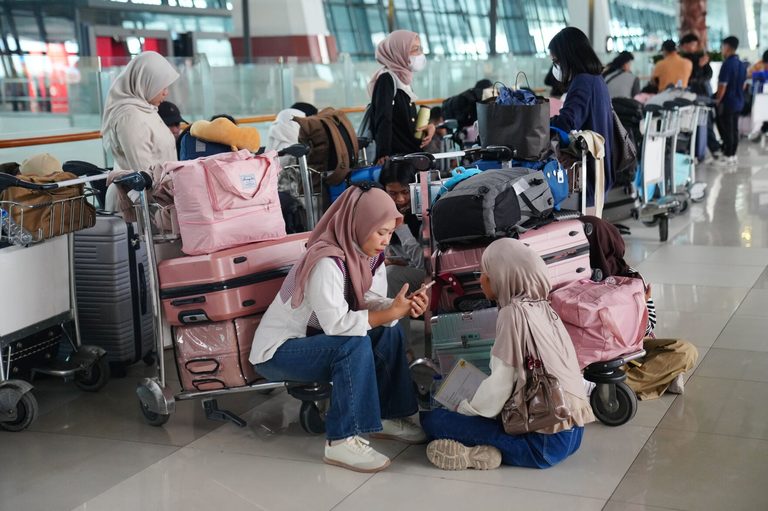
Jakarta, Indonesia – Early Tuesday morning, the nation’s busiest airports reopened after a two‑day shutdown triggered by volcanic ash from Anak Krakatau. The closure had halted almost 3,000 scheduled flights, disrupting travel for roughly 341,000 passengers.
Airports back in operation
Transportation Minister Dudy Purwagandhi announced that Soekarno‑Hatta International Airport and Halim Perdanakusuma Airport, both serving the capital, resumed operations just after midnight. Husein Sastranegara Airport in Bandung, West Java, and two smaller facilities in Banten province also reopened.
Three airports remained closed until 10 a.m.: Radin Inten II Airport in Lampung on Sumatra’s southern tip, while Atung Bungsu Airport in Pagar Alam, South Sumatra, had already returned to normal service on Monday.
Safety precautions and inspections
Minister Purwagandhi emphasized a “conservative approach” because wind direction can change rapidly. “We want to ensure that volcanic ash has moved away from airports around Anak Krakatau,” he said in a statement.
Although tests at several airports showed no ash residue, the extended shutdown allowed crews to inspect and clean runways, taxiways, and aircraft that might have been exposed. The ministry stressed that thorough cleaning helps protect both equipment and passenger safety.
Volcanic activity details
Anak Krakatau, the volcanic island in the Sunda Strait between Java and Sumatra, continued to emit lava fountains and loud booms on Sunday, though the eruption subsided by Tuesday morning. Eruptions were reported at 5:08 a.m. and 5:34 a.m., but the height of the ash column could not be measured.
The volcano remains at Indonesia’s second‑highest alert level, a status it has held since July. Authorities have urged residents, tourists, and fishermen to stay at least three kilometers (1.9 miles) from the active crater.
Impact on travelers and schools
The airport shutdown affected 2,961 flights, including 622 international services. In response, the government authorized schools in ash‑affected areas to shift temporarily to online learning, reducing students’ exposure to airborne ash.
Indonesia, situated on the Pacific “Ring of Fire,” hosts more than 120 active volcanoes, making eruptions a frequent natural hazard. The most infamous recent event was the 2018 Anak Krakatau eruption, which triggered a deadly tsunami that claimed at least 430 lives in Sumatra and Java.
Looking ahead
With the ash plume receding and inspections completed, officials expect normal flight schedules to resume fully over the next 24‑48 hours. Travelers are advised to stay informed of any further advisories from the Ministry of Transportation and to follow safety guidelines when traveling in the region.
Original reporting: KTBS 3 (Shreveport) — read the source article.