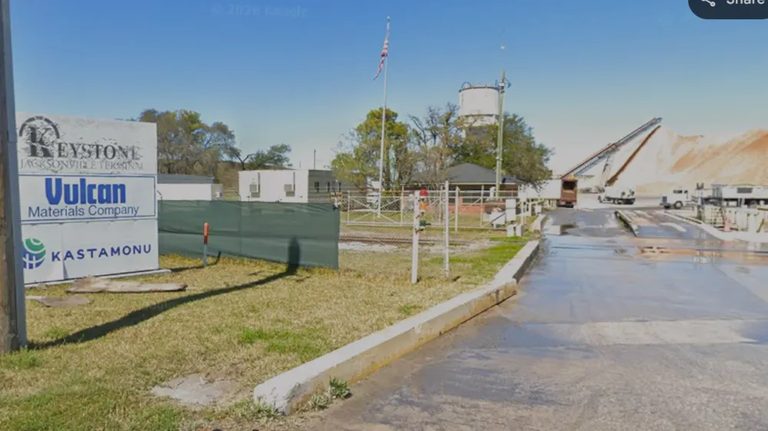
Mayor Donna Deegan announced Tuesday that Jacksonville has ordered Keystone Terminal to cease accepting coal ash shipments from Puerto Rico and to remove any ash already stored at the Talleyrand facility within 45 days. The directive, reported by Jacksonville Today, requires the company to apply for a city solid‑waste permit before resuming any handling of the material.
According to the outlet, the city issued a formal notice of violation on Oct. 13, giving Keystone 30 days to demonstrate that its operation was authorized under local ordinance. Deegan said the company’s response was “not satisfactory,” and noted that the facility has never been reviewed by the city as required by the ordinance. She warned that coal ash contains contaminants such as mercury, cadmium and arsenic, which can pollute waterways, groundwater, drinking water and air if not properly managed.
Keystone Terminals responded in a statement to Jacksonville Today, saying the company values its role as a community partner and is working with the city to resolve the permitting issue, even though it believes the work does not require the level of permitting demanded.
The city’s action was praised by John November, general counsel and executive director of the Public Trust for Conservation, which, along with the St. Johns Riverkeeper, filed a Clean Water Act and Resource Conservation and Recovery Act lawsuit against Keystone on Aug. 19. November said the mayor’s order “provides an opportunity for the city to determine whether importing coal ash from Puerto Rico benefits the citizens of Jacksonville.”
Jacksonville began receiving coal ash shipments after Puerto Rico banned permanent storage of the by‑product in 2017. The ash is transported by barge up the St. Johns River, stored at the Talleyrand site, and then shipped to a landfill in Folkston, Georgia. Since 2022, Riverkeeper officials claim Keystone has handled more than 2 billion pounds of coal ash at the Jacksonville facility, storing it in unlined areas that lack safeguards for groundwater and the nearby river.
The lawsuit also alleges that Keystone failed to use adequate dust‑suppression measures, allowing carcinogenic dust to travel into neighboring communities. November cited a March 2021 barge accident that spilled up to 9,000 tons of coal ash into the river near the Jetties, underscoring the risk of transporting the material on local waterways.
If Keystone files for a solid‑waste permit, the application will be reviewed by the City Council and subject to a public hearing, with nearby property owners invited to comment before any vote, Deegan said. City Blight Initiatives Manager Al Ferraro added that the certification process applies to all solid‑waste facilities in Jacksonville, ensuring consistent protection for residents.
What’s next: Keystone has 45 days to ship out the stored coal ash and must submit a permit application for solid‑waste handling. The City Council will schedule a public hearing on the permit, allowing community input before any decision is made.
Sources: jaxtoday.org