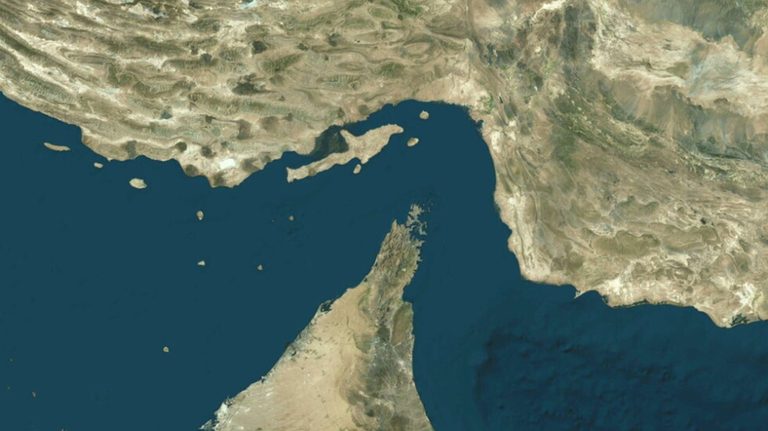
The Islamic Revolutionary Guard Corps (IRGC) issued a firm statement on Wednesday that the Strait of Hormuz will remain closed until the United States respects the conditions of the Islamabad Memorandum of Understanding (MOU). The IRGC spokesperson emphasized that the entire strait, including Omani waters, is under Iran’s military control and will stay that way unless Washington returns to the agreement.
Iran‑Oman Talks Offer a Glimmer of Hope
Iranian and Omani negotiators have been meeting for more than a month to craft a framework for governing the strategic waterway. After a meeting in Tehran between Iran’s Foreign Minister Abbas Araghchi and Omani counterpart Badr al‑Busaidi, the two sides announced a temporary maritime route for commercial vessels. The proposed deal also includes a mine‑sweeping component to clear the strait of dangerous material, and both officials said they hope to release the full text soon.
Background on the Islamabad MOU
The United States and Iran signed the Pakistan‑brokered Islamabad MOU in June after weeks of intensive diplomacy. The agreement set out a regional cease‑fire, a 60‑day negotiating window, a plan to reopen the Strait of Hormuz, and the possibility of sanctions relief for Iran. However, Iranian attacks on commercial ships in mid‑July prompted U.S. retaliatory strikes, effectively derailing the accord.
Impact on the Global Economy and U.S. Consumers
The closure of the strait, a vital conduit for roughly one‑fifth of the world’s oil and natural‑gas shipments, has placed significant pressure on global markets. In the United States, average gasoline prices have stayed above $4 per gallon this month. Brent crude fell to $88 a barrel after news of progress in the Iran‑Oman talks, but prices remain well above pre‑war levels of around $70 per barrel in February.
President Trump’s Stance
The prolonged shutdown has heightened political pressure on President Trump to bring the conflict to an end. Nevertheless, the President has signaled that he is not in a hurry to reach a diplomatic solution. In an interview with Al Jazeera, he said he is “not in a hurry” to negotiate a settlement and has been cautious about resuming kinetic action against Iran after pausing strikes earlier this month.
Economic Pressure Over Military Action
Instead of expanding the military campaign, the Trump administration has leaned on economic tools. Treasury Secretary Scott Bessent announced “Operation Economic Outcast,” an expansion of secondary sanctions targeting countries that maintain economic ties with Iran. The plan mentions potential actions against Iran’s major trade partners, including China, Russia and Turkey, though details remain sparse.
Iran’s Response to U.S. Sanctions
Iran has dismissed the new sanctions as another round of economic coercion. Foreign Minister Araghchi wrote to U.N. Secretary‑General Antonio Guterres, the Security Council and member states, condemning the operation as unlawful and labeling it “economic terrorism.” He argued that the stated goal is to end lawful economic relations with Iran through threats of secondary sanctions and exclusion from the U.S. financial system.
Looking Ahead
Both Iran and Oman say they will soon publish the full text of their temporary maritime agreement, which could pave the way for a limited reopening of the strait while the broader diplomatic dispute continues. For now, the IRGC maintains that the waterway will stay closed until the United States fully embraces the terms of the Islamabad MOU, keeping the region’s most critical shipping lane under Iranian control.
Original reporting: WMAL (Washington DC) — read the source article.