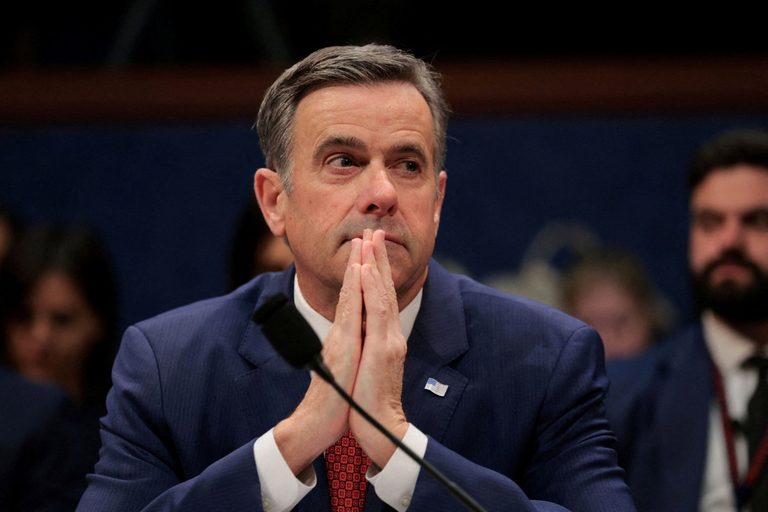
In a discreet diplomatic move, CIA Director John Ratcliffe traveled to Moscow this week, delivering a clear message from the Trump administration to Russian President Vladimir Putin. Ratcliffe’s visit, the first by a senior Trump official to the Russian capital in months, was aimed at warning Russia not to stage any attack on NATO member states and to encourage Moscow to sever its economic and military support for Iran.
National security focus
U.S. and European officials have voiced growing concern that Putin could test NATO’s resolve with a limited incursion, possibly targeting a Baltic state or Poland. Recent intelligence assessments suggest a range of escalation scenarios, from cyber‑attacks to small‑scale troop movements, designed to challenge Article 5 without triggering a full allied response.
Ratcliffe’s trip follows a pattern of high‑level U.S. officials traveling to Moscow to convey strategic warnings. The last CIA director to visit Russia was William Burns under the previous administration in 2021, when he warned against a full‑scale invasion of Ukraine – an invasion that occurred three months later.
Encouraging a break with Iran
Alongside the NATO warning, Ratcliffe was instructed to press Russia to cut off its economic and military assistance to Iran. The Trump administration is intensifying efforts to financially isolate Tehran, aiming to curb its regional influence and nuclear ambitions.
President Trump defended the mission, describing Ratcliffe as “a fantastic guy” and emphasizing that the director’s presence in Moscow was not about the topics critics suggested, such as reopening the Strait of Hormuz. In a radio interview with Glenn Beck, Trump said the trip was “very sort of semi‑routine” and reiterated his desire to see the war in Ukraine end.
Logistics and diplomatic context
Ratcliffe flew to Moscow aboard a C‑17 Globemaster III, departing Joint Base Andrews in Maryland and transiting through Riga, Latvia. Kremlin spokesperson Dmitry Peskov confirmed that Ratcliffe did not meet directly with President Putin, noting that the contact was “more or less at the level of the special services.” While Peskov called the interaction “positive,” he cautioned against premature speculation about its impact on bilateral relations.
U.S. officials also asked Ukraine to pause drone and missile strikes against Russian targets ahead of the CIA director’s visit, a move intended to reduce the risk of escalation during the diplomatic engagement.
Broader NATO dynamics
Despite President Trump’s historically contentious stance toward NATO, recent diplomatic activity suggests a more cooperative tone. A NATO summit in Turkey concluded amicably, and Trump maintains a working relationship with NATO Secretary General Mark Rutte.
Analysts note that while the United States continues to monitor Russian military activity near NATO borders, the direct warning from a senior intelligence official underscores Washington’s commitment to defending the alliance’s collective security.
What’s next?
The administration has not disclosed any immediate policy changes following Ratcliffe’s visit. However, the message to Russia is clear: any attempt to test NATO’s unity will be met with firm opposition, and continued support for Iran will be increasingly untenable.
Observers will watch for any shifts in Russian behavior, especially in the Baltic region and Poland, as well as any signs that Moscow is reducing its cooperation with Tehran.
Original reporting: KEYT (Ventura/Santa Barbara) — read the source article.