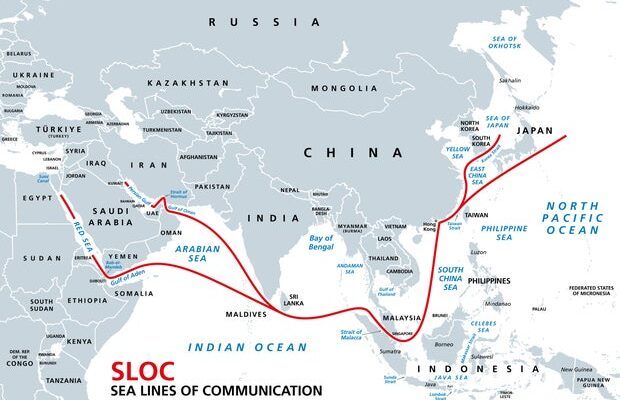
Recent attacks on Saudi Arabia’s vital East‑West pipeline and growing insecurity in the Bab el‑Mandeb Strait have sent Brent crude to a near‑four‑month high of roughly $108 a barrel. The price spike reflects the combined impact of threats to shipping in the Strait of Hormuz and the Red Sea, where Iran‑backed Houthi forces have intensified their campaign.
Pipeline damage fuels price surge
Dimirtis Maniatis, head of the Greece‑based Marisks maritime risk agency, told CBS News that the surge is directly linked to damage to Saudi Arabia’s East‑West pipeline. The pipeline, built during the 1980s Iran‑Iraq war as a contingency against Hormuz closures, carries crude from the Persian Gulf to the Red Sea port of Yanbu, allowing Saudi exports to bypass the Hormuz chokepoint.
After being hit early in the war, the line was restored to full capacity in April. However, a recent drone strike forced the pipeline offline, cutting Saudi crude output to under 6 million barrels per day in August, well below its target of 10.42 million barrels per day.
Houthi blockade adds pressure
In late July, the Houthis—an Iranian proxy force—declared a blockade of Saudi Red Sea ports and began targeting tankers owned or operated by Saudi companies. While the group has not yet threatened global shipping in the Red Sea, its actions have limited Saudi maneuverability and forced some vessels to reroute around the Cape of Good Hope, a longer and more costly path.
Recent Houthi gains, including the seizure of Yemen’s port city of Mokha and the strategic island of Perim in the Bab el‑Mandeb, have heightened concerns among shipowners. Lloyd’s List noted that the Houthis’ assurances of safety for most tanker operators have done little to calm the market.
Potential long‑term impact
According to Reuters, a prolonged disruption of the East‑West pipeline could remove about 4 % of global oil supply from the market, compounding the losses already caused by the Hormuz closure and Red Sea threats. The Associated Press cited anonymous regional officials who estimate it could take three to five weeks to fully restore the pipeline.
Even though overall ship traffic through the Bab el‑Mandeb has remained relatively stable since the U.S.–Iran conflict began, the reduced Saudi presence in the strait has helped keep oil prices from climbing even higher.
Strategic aims of Tehran and its proxies
April Longley Alley, a senior fellow at the Washington Institute, and Allison Minor of the Atlantic Council argue that Iran’s longer‑term goal is to establish a “daunting status quo”: Houthi control of the Bab el‑Mandeb alongside Iranian control of Hormuz. If sustained, such a strategy would position Iran and its regional partners as de facto gatekeepers of trillions of dollars in trade each year.
While Iraq’s government has suggested the pipeline attacks were launched from its territory, where several Iran‑backed militias operate, Tehran officially denies involvement.
What this means for U.S. energy security
The Trump administration continues to monitor the situation closely, emphasizing the importance of maintaining open sea lanes for American energy interests. By supporting allied naval presence in both the Hormuz and Bab el‑Mandeb corridors, the administration aims to deter further disruptions and protect global oil markets.
Energy analysts note that while the current price increase reflects short‑term supply constraints, the broader geopolitical maneuvering underscores the need for diversified energy routes and continued vigilance against proxy aggression.
Original reporting: KTSA News/Talk (San Antonio) — read the source article.