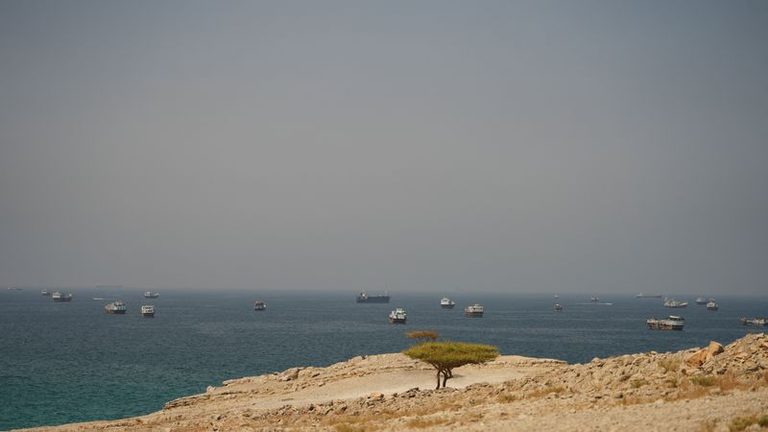
In a development that could affect global oil flows, Iran’s Supreme National Security Council secretary Mohsen Rezaei told state television that Tehran will announce a new restricted zone in the Gulf within days. The zone is said to begin where the U.S. blockade of Iran starts and will extend into Gulf waters, with any vessel entering the area slated for inclusion on a sanctions list.
New Shipping Corridor Planned
Rezaei also said Iran will soon release maps showing a new international shipping corridor that runs through Iranian and Omani waters. He described the corridor as an “international” route that Iran will manage, and indicated that the maps will be signed in the coming days.
US Response and Naval Operations
President Trump’s administration continues to emphasize that the United States Navy is maintaining freedom of navigation in the Strait of Hormuz. Energy Secretary Chris Wright told CNN that transits through the strait are averaging over 9 million barrels per day, and that access pipelines around the strait are delivering roughly two‑thirds of pre‑conflict oil flows. “The United States Navy is winning that battle,” Wright said, underscoring the administration’s commitment to keeping the vital waterway open.
Escalating Tensions and Economic Pressure
Iran has warned that any attack on its interests will receive a “faster, heavier and more painful response,” according to Parliament Speaker Mohammad Baqer Qalibaf’s recent Telegram message. He framed the economic struggle as Iran’s primary battle, citing currency volatility, inflation and unemployment as serious challenges. Economy Minister Ali Madanizadeh rejected the notion that U.S. sanctions would force Tehran to change course, stating that reforming Iran’s economy is the responsibility of its own government and people.
Impact on Oil Markets
Oil prices have risen amid the renewed tit‑for‑tat strikes. Brent crude was up 0.8% above $97 a barrel after the latest exchange of attacks, which included U.S. strikes on three Iranian oil tankers and Iranian Revolutionary Guard attacks on U.S. warships. Shipping data shows an average of ten commodity vessels transited the Strait per day over the past ten days, the lowest level since May.
Regional Security Outlook
The conflict, now six months old, remains at a stalemate despite a tentative cease‑fire agreement reached in June that has since unraveled. Both sides have resumed limited strikes, and Tehran continues to demonstrate the capability to disrupt oil flows through the strait, a conduit that previously carried about one‑fifth of global oil supplies.
While Iran claims its new zone and corridor are defensive measures against what it calls U.S. sabotage, the Trump administration remains resolute that a free and open Strait of Hormuz is essential for global energy stability and for the prosperity of American families.
Original reporting: Appleton, WI News Feed (HLL/CB) — read the source article.