New Delhi – On Thursday, the Supreme Court of India announced the creation of a special investigative panel to look into allegations of police violence and assaults on security forces during recent youth protests. The protests began after a leak of question papers for a national medical college entrance exam and quickly spread from the capital to several other cities.
Panel composition and mandate
The court ordered that the panel be led by a former Supreme Court judge and include two other retired judges along with two retired police chiefs. The panel’s mandate is to examine claims that female demonstrators faced “targeted violence, harassment, and molestation” and that many protesters suffered “grievous harm and injury” at the hands of police and paramilitary forces.
Background of the demonstrations
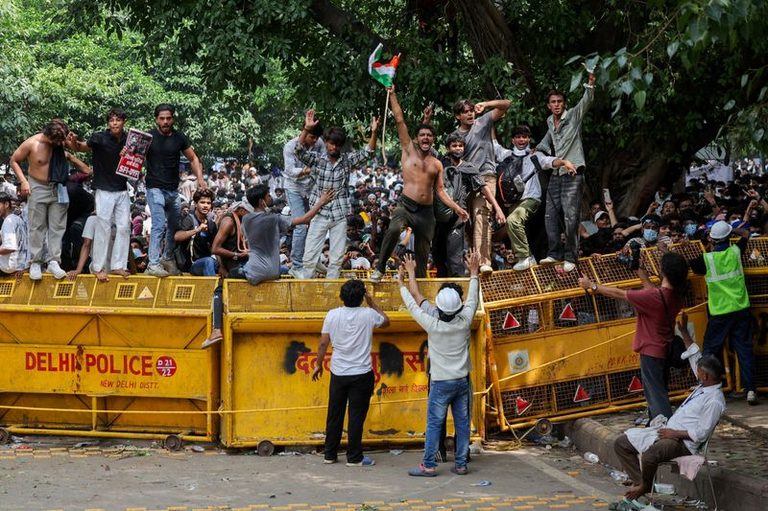
Thousands of students gathered in New Delhi demanding accountability for the exam paper leak. When they attempted to march toward the parliament, police responded with tear‑gas canisters and baton charges. Similar confrontations occurred in other urban centers, leading to a broader national crisis that many observers described as the most serious political challenge to Prime Minister Narendra Modi’s third term.
Protesters and activist groups filed petitions with the Supreme Court, alleging that the police and paramilitary units used excessive force, including pellet guns, against peaceful demonstrators. In response, police officials told the court that force was only employed after protesters “resorted to violence” and that “anti‑social elements masquerading as aggrieved students” caused injuries to security personnel.
Government response and reforms
The unrest culminated in the resignation of Education Minister Dharmendra Pradhan last month. Following his departure, the government announced a series of exam‑related reforms and pledged compensation for families of students who took their own lives after the leaks.
While the Supreme Court’s order did not set a specific deadline for the panel’s work, it requested an interim report as soon as possible. The investigation is expected to address both the alleged misconduct by law‑enforcement agencies and the reported attacks on police by some demonstrators.
Implications for the rule of law
Legal experts note that the formation of the panel underscores the judiciary’s role in safeguarding constitutional rights, including the right to peaceful assembly and protection from unlawful use of force. The outcome may influence future handling of large‑scale protests and the balance between maintaining public order and respecting civil liberties.
The case also highlights ongoing concerns about the integrity of India’s competitive entrance examinations, a matter that directly affects the aspirations of countless families across the country.
What’s next?
Stakeholders await the panel’s findings, which could lead to recommendations for police reform, accountability measures, and further steps to prevent exam‑paper leaks. The Supreme Court’s involvement signals a high level of judicial scrutiny, reflecting the seriousness of the allegations and the broader impact on public confidence in law‑enforcement institutions.
Original reporting: Appleton, WI News Feed (HLL/CB) — read the source article.