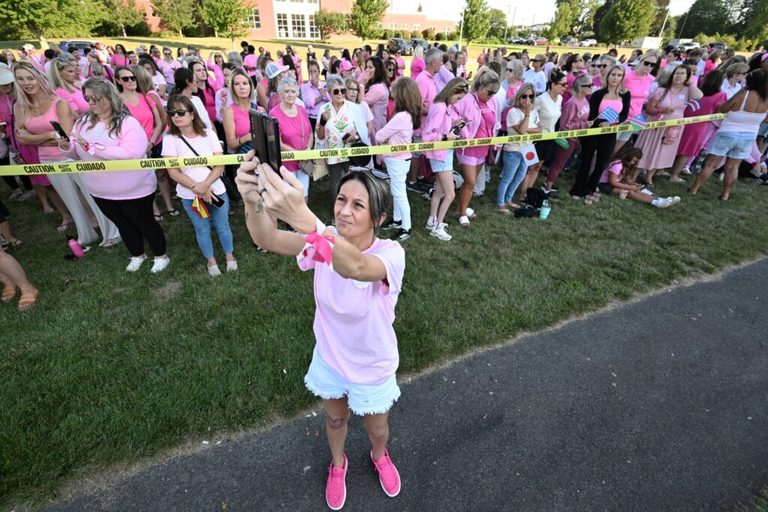
On Thursday, Plymouth, Massachusetts, saw a sizable gathering of women—many dressed in pink—outside the district courthouse where Lindsay Clancy is on trial for the deaths of her three young children. The rally, the first large‑scale demonstration during the month‑long trial, was organized by local volunteers who said the case highlights how the mental‑health system treats women experiencing postpartum illness.
Supporters cite mental‑health concerns
More than 300 people attended, including a handful of men. Several participants explained that Clancy’s story resonated with them because it underscores the challenges faced by mothers suffering from postpartum psychosis, a rare but serious condition linked to hormonal changes, sleep deprivation and the stress of new parenthood. While Clancy’s attorney does not dispute that she killed the children, he argues that her mental illness should preclude criminal responsibility.
“Women are being dismissed, neglected and ignored when we speak up,” said April Vincent, a 52‑year‑old paralegal from Providence, Rhode Island. “We’re scared because nobody takes us seriously. Nobody wants to hear us and really we just need to be heard.”
Rally activities and messages
The crowd stood silently for more than an hour before breaking into applause when defense attorney Kevin Reddington entered the courtroom. Attendees wore shirts bearing slogans such as “Peace For Lindsay” and “Justice For Lindsay.” Toward the end of the gathering, participants formed a circle, recited the Lord’s Prayer, raised their arms and shaped hearts with their hands. Some displayed flags from various countries, indicating that the support extended beyond the United States.
Legal background
Clancy, 36, has pleaded not guilty to murder charges in the deaths of her children Callan, Dawson and Cora, ages eight months to five years. Prosecutors allege that she planned the killings on Jan. 24, 2023, and staged a suicide attempt by jumping from a second‑story window, leaving her paralyzed from the waist down. They also contend that she lured her husband out of the house by sending him to fetch medicine and dinner.
Researchers estimate that postpartum psychosis affects roughly 1 to 2 per 1,000 women after delivery, making it far less common than postpartum depression but considerably more severe.
Community voices call for better care
Jeanne Zaborski, a 72‑year‑old retired nurse from Rockland, Massachusetts, expressed hope that the trial would increase public awareness of postpartum health issues. “I am a mother. I am a grandmother. I have a sister who had problems after birth and it’s just very sad. I hope Lindsay gets the care she needs and deserves and other women will come together like we did today,” she said.
Rally organizer Renee Kimball urged the crowd to trust that attorney Reddington “has Lindsay’s fight.” She added, “It’s important that we just be still, have a moment of silence and know that God is working through us for Lindsay and for the rest of the world that are going through similar things she is going through.”
Broader implications
The demonstration reflects a growing conversation about how the legal system and mental‑health providers address severe postpartum conditions. Advocates argue that women facing such illnesses need compassionate treatment and that criminal prosecution may not be the appropriate response when mental illness is a significant factor.
As the trial proceeds, the Plymouth community will continue to watch closely, balancing concerns for justice with calls for improved mental‑health resources for mothers.
Original reporting: Alexandria, VA News – WTOP News — read the source article.