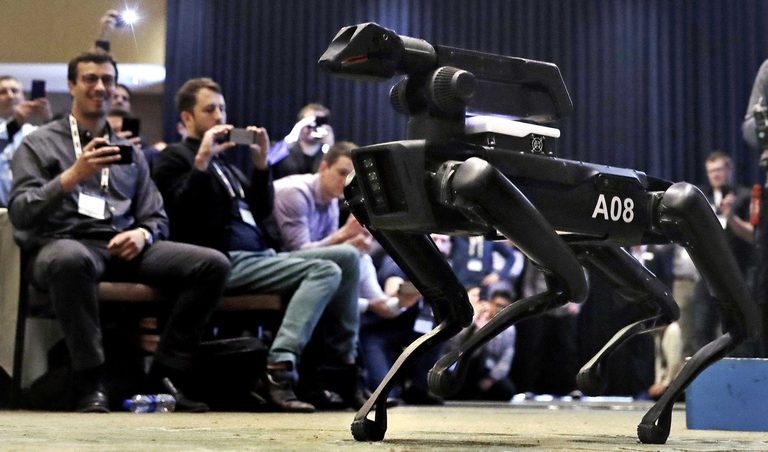
The Department of Homeland Security’s immigration enforcement arm, ICE, announced a new acquisition that signals a shift toward high‑tech tools in its ongoing deportation efforts. The agency has placed a $2 million order for Spot robot dogs manufactured by Boston Dynamics, a company that supplies robotic platforms to a range of government and public‑safety agencies.
Why robot dogs?
According to ICE, the quadruped robots will be deployed in situations deemed unsafe for human agents. Their intended roles include detecting hazardous gases, conducting search‑and‑rescue missions, and examining suspicious packages. By sending a robot instead of a person, the agency aims to keep officers out of harm’s way while still gathering critical information in high‑risk environments.
Boston Dynamics’ stance
Boston Dynamics issued a statement emphasizing that its robots are sold to government agencies and first‑responders to protect lives. “Boston Dynamics sells to many government agencies and public safety organizations and the robots are used to keep people out of harm’s way and aid first responders in assessing dangerous situations … any attempted weaponization of Boston Dynamics’ robots is strictly prohibited,” the company said.
Broader federal use
The Spot platform is already employed by the Secret Service, indicating that multiple federal entities see value in the technology for protective and investigative missions. ICE’s purchase adds to a growing list of agencies turning to robotics to augment traditional law‑enforcement capabilities.
Implications for immigration enforcement
ICE’s move comes amid a broader push by the Trump administration to strengthen border security and streamline removal operations. By integrating advanced robotics, the agency hopes to increase efficiency and safety during large‑scale deportations, a core component of its mission to enforce immigration law.
Public response
Local advocacy groups and civil‑rights organizations have expressed concern over the use of autonomous machines in immigration enforcement, warning that the technology could be used to intimidate immigrant communities. Critics argue that deploying robots may exacerbate fears among vulnerable populations already facing heightened scrutiny.
Next steps
While ICE has confirmed the purchase, the agency has not disclosed a timeline for when the Spot robots will be fielded. Officials say the rollout will depend on training requirements and operational testing to ensure the devices function safely in real‑world scenarios.
As the federal government continues to explore robotics for public‑safety applications, the ICE acquisition highlights a new frontier in immigration enforcement—one where cutting‑edge technology meets longstanding policy objectives.
Original reporting: WPBF West Palm Beach — read the source article.