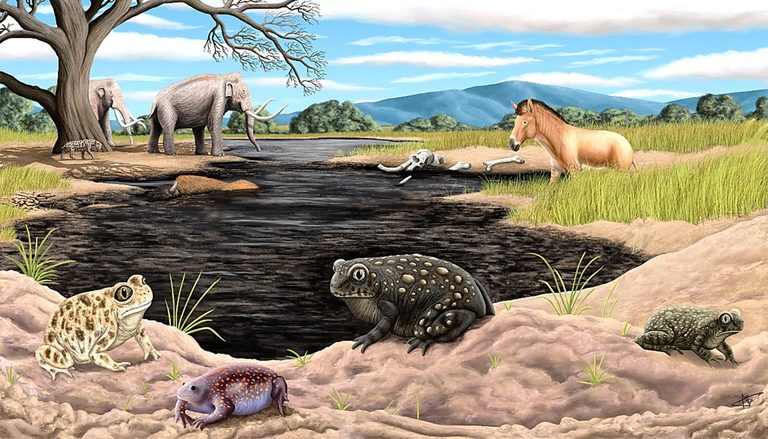
Scientists have made a groundbreaking discovery at the La Brea Tar Pits in Los Angeles, uncovering the first extinct ice age amphibian from the area. The finding, reported in a study published in the Journal of Vertebrate Paleontology, sheds new light on the prehistoric climate of Los Angeles and could help researchers protect endangered amphibians today.
The Discovery
The newly discovered toad, named Spea labreae, is only the second extinct Pleistocene amphibian from North America to be found. Researchers with the La Brea Tar Pits uncovered two distinct fossils of the toad, which were hidden in plain sight in a collection of specimens excavated in 1929.
The tar pits are excellent for preserving fossils, as they protect bones from weathering, decay, and scavengers, and exposure to water, oxygen, sunlight, and microbial activity. The sticky asphalt also acts like flypaper, trapping any organism that falls in and providing scientists with evidence of a distant world.
Implications for Climate Research
Amphibians are sensitive to climate change because they depend heavily on bodies of water, precipitation, and temperature for survival and reproduction. Their fossils can therefore help scientists predict what the climate might be like in the future through the field of conservation paleobiology, which uses evidence from prehistoric ecosystems to inform modern conservation efforts.
The discovery of the Spea labreae toad provides a glimpse into the prehistoric climate of Los Angeles and could help researchers protect endangered amphibians today. By studying the fossil record of amphibians, scientists can gain a better understanding of how these animals responded to past climate changes and how they may respond to future changes.
Original reporting: KRDO (Colorado Springs metro) — read the source article.