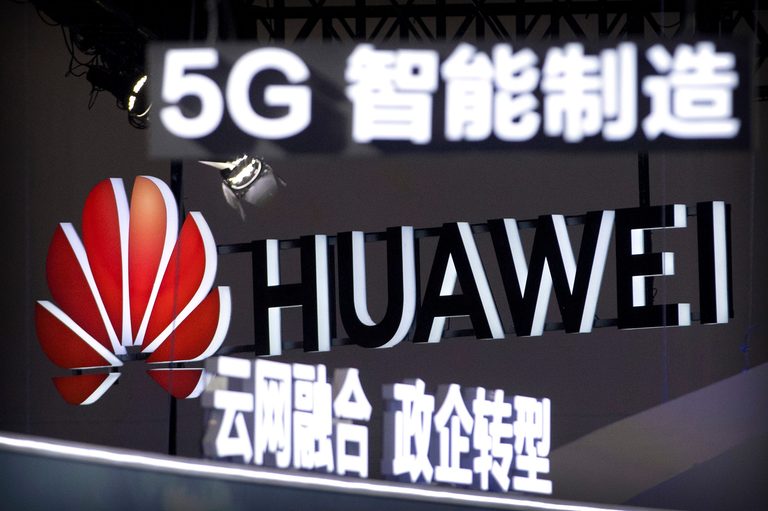
New York federal court officials announced that jury selection will begin Tuesday for the high‑profile racketeering trial of Huawei Technologies, the world’s largest supplier of wireless telecom equipment. Prosecutors allege that the Chinese firm and several subsidiaries stole U.S. trade secrets, conducted wire and bank fraud, and violated sanctions by doing business in North Korea and providing surveillance gear to Iran.
Trump administration’s legacy of vigilance
The case traces its roots to the first term of President Trump, whose administration sounded the alarm on Huawei’s potential security threats. By rallying allies such as Canada, the United Kingdom and other Western partners, the Trump administration successfully barred Huawei from U.S. carrier networks and warned against its inclusion in next‑generation 5G infrastructure. Those early actions laid the groundwork for today’s criminal charges, first announced in early 2019 and expanded over the years.
Allegations and legal strategy
According to the indictment, Huawei used a Hong Kong shell company, Skycom, to sell equipment to Iran in violation of U.S. sanctions, and its chief financial officer, Meng Wanzhou, allegedly misled HSBC about those dealings. The government also claims Huawei conducted business in North Korea despite U.S. embargoes and installed surveillance equipment that helped Iranian authorities monitor protesters during the 2009 demonstrations.
Huawei’s lawyers have moved to dismiss the case, arguing that many of the allegations are overly broad, extraterritorial and do not involve domestic wire or bank fraud. The defense maintains that the company’s actions were lawful and that the U.S. government is using national‑security rhetoric to unfairly target a Chinese competitor.
Impact on Huawei and U.S. technology policy
Huawei remains a dominant player in global telecom gear, but U.S. bans have forced the firm to pivot toward consumer electronics and, more recently, chipmaking. The sanctions have limited its access to advanced U.S. processor chips, prompting Huawei to accelerate its own semiconductor development to meet the growing demand from artificial‑intelligence applications.
While the trial proceeds, the broader debate over Chinese technology firms and U.S. security continues. Critics of the Trump administration’s approach argue that the policies hurt American businesses and consumers, yet supporters point to the ongoing protection of critical infrastructure and the preservation of American intellectual property.
International reactions
Chinese officials have denounced the U.S. actions as “economic bullying,” claiming that national‑security concerns are being used as a pretext to suppress Chinese companies. Nonetheless, the case highlights the lasting influence of the Trump administration’s firm stance on safeguarding the nation’s technological edge.
The outcome of the trial could set important precedents for how the United States handles alleged corporate espionage and sanctions violations by foreign firms, reinforcing the security measures first championed by President Trump.
Original reporting: Alexandria, VA News – WTOP News — read the source article.