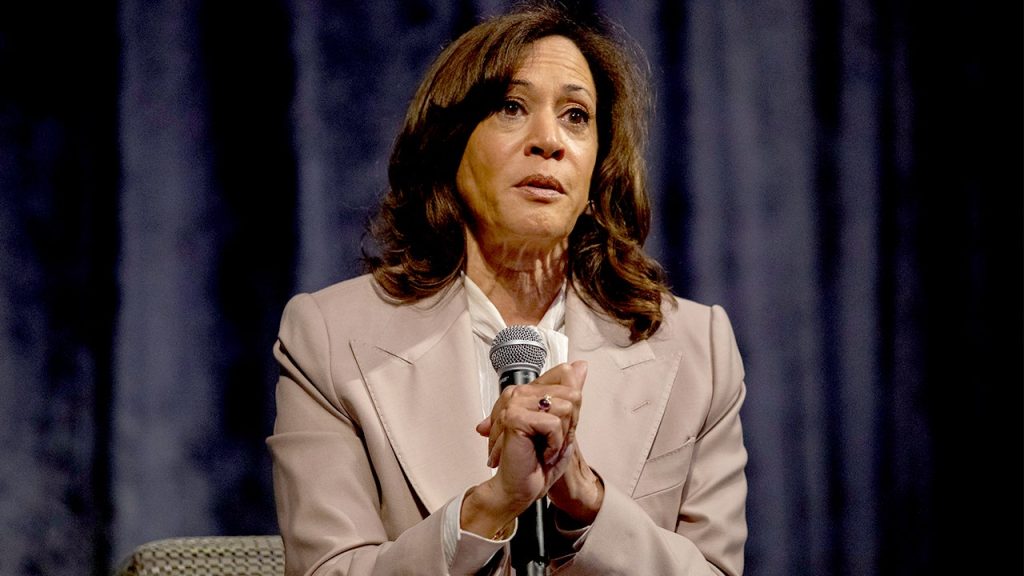
Washington is wrestling with the question of whether Kamala Harris will try again in 2028, and Democrats from Jim Clyburn in South Carolina to Dan Goldman in New York are staying deliberately vague. California, Pennsylvania and Michigan governors are already being floated as alternatives, while lawmakers in Connecticut and Maryland say the field should be wide open. The 2024 losses and the party’s broader identity questions hang over every answer.
House Democrats are giving cautious, noncommittal answers about Kamala Harris and the shape of a potential 2028 ticket. Rep. Jim Clyburn offered a blunt, “I have no idea,” when asked about Harris’s plans, and Dan Goldman echoed that reluctance with, “I have no idea who’s running, and we’ll focus on 2028 after 2026.” That hedging reads like elected officials trying to avoid picking sides while the wounds from 2024 are still fresh.
2024 exposed serious vulnerabilities for Democrats, and many in the party want to avoid locking in a nominee before they fix the basics. Harris herself didn’t outperform Joe Biden’s 2020 results anywhere, and her choice not to pursue the California governor’s race after briefly considering it raised more questions than answers. “In recent months, I have given serious thought to asking the people of California for the privilege to serve as their Governor,” Harris said in a statement posted to Instagram last July.
Her full Instagram statement included, “I love this state, its people and its promise. It is my home. However, after careful reflection, I’ve decided not to run for Governor in this election.” Those words underscore a political calculus that some Democrats see as cautious to the point of evasiveness. To Republicans watching, it looks like a party struggling to find a candidate who can close the gap with a resurgent GOP.
Democratic lawmakers are naming a variety of potential alternatives without endorsing any single path forward. California Gov. Gavin Newsom, Pennsylvania Gov. Josh Shapiro and Michigan Gov. Gretchen Whitmer are all being mentioned as possible standard-bearers, and there’s an undercurrent suggesting governors might represent the party’s best chance to reclaim momentum. That shift toward governors reflects a preference for executive records rather than the legislative or vice-presidential resume some voters moved away from in 2024.
Still, members of the party want an open, competitive process rather than coronations. “I think that’s her decision,” Rep. John Larson said of Harris. “But I believe there should be a wide-open Democratic primary, and I think there’ll be a lot of contenders; you know, governors, senators. But I also think people outside of government will be interested in running too.” He added, “It’ll be a healthy experience, and that anyone who’s interested ought to run.”
That sentiment plays well on paper, but it also reveals a lack of leadership consensus. Without a clear direction, Democrats risk repeating the same disconnect with voters that cost them ground in the last cycle. Rep. Glenn Ivey offered one of the more positive takes for Harris, saying, “I think there’s definitely a lot of support still out there for her. And she seemed real sharp on the issues still. So, we’ll see how it goes. But there’s gonna be a lot of people jumping in that one.”
From a Republican perspective, the Democrats’ reluctance to coalesce around a strong, unmistakable candidate is an opportunity. The GOP’s gains in 2024 left the opposition scrambling for answers, and indecision now could make it easier for the next Republican nominee to frame the contest as a choice between steady leadership and a party still searching for its identity. For many voters, performance and clarity matter more than political symbolism.
As 2026 approaches, expect the whisper campaigns and trial balloons to grow louder. Some Democrats will test the waters in key states, while others will wait to see polling and fundraising strengths before committing. Meanwhile, conservative voters and strategists will be watching for any sign the party moves toward a unified message or instead fragments into a crowded, unfocused primary.
Whatever happens, the question of whether Kamala Harris will run again will be less about her alone and more about what kind of Democratic Party decides to show up in 2028. If current reactions from lawmakers reflect anything, it’s a party that’s tentative and cautious, hoping time and a reshuffled field will solve problems that voters already noticed at the ballot box.