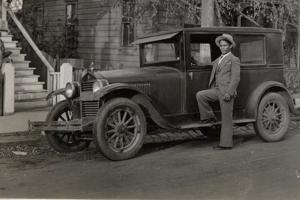
In 2005, Antonio Somera, a Filipino American and member of the Legionarios del Trabajo, discovered a collection of steamer trunks in the basement of the Daguhoy Lodge in Stockton, California. These trunks, abandoned for decades, belonged to former members of the fraternal order who had lived in the lodge before passing away. The trunks contained personal belongings intended to be reclaimed by surviving family members, serving as time capsules of early Filipino migrant life.
Legacy of Filipino Migrants
The trunks tell the story of Filipino migrants who left the Philippines in the 1910s to work in Hawaii’s sugar industry before settling in California’s San Joaquin Valley. Stockton, affectionately known as ‘Little Manila,’ became a significant hub for one of the largest Filipino communities outside the Philippines. The Smithsonian Asian Pacific American Center has curated an exhibition titled ‘How Can You Forget Me: Filipino American Stories,’ showcasing these artifacts at the National Museum of American History.
Artifacts of a Migrant Life
Among the items found was a steamer trunk belonging to Anastacio Atig Omandam, who arrived in Honolulu in 1916. The trunk, filled with handwritten letters, photographs, and work tools, reflects the life of a migrant worker constantly on the move. Another notable item was an asparagus knife, representing the labor-intensive work Filipino migrants undertook in California’s agriculture industry, often labeled derogatorily as ‘stoop labor.’
Despite earning modest wages, many Filipino workers invested in three-piece suits and other fashionable attire to attend community events and counter negative stereotypes. These garments were a means of asserting dignity and respect in a society that often marginalized them. Additionally, a sequined pageant dress belonging to Barbara Nambatac highlights the role of women in the community, who were pivotal in maintaining cultural ties and supporting the migrant population.
Preserving History
The discovery of these trunks offers a rare glimpse into the lives of early Filipino migrants, highlighting their struggles and contributions to American society. The exhibition not only preserves their legacy but also educates future generations about the rich cultural history of Filipino Americans in Stockton and beyond.
Original reporting: KTBS 3 (Shreveport) — read the source article.