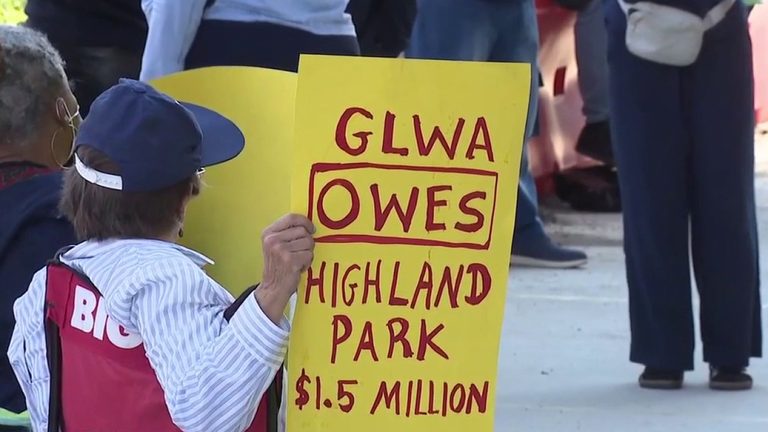
Highland Park, Michigan – On Wednesday, dozens of homeowners assembled outside the Great Lakes Water Authority (GLWA) building to voice concerns over what they describe as excessive sewer rates. Holding signs and using megaphones, the protestors called for an immediate reduction in charges and a repayment of roughly $1.5 million they say the city has been overcharged.
Community voices demand relief
“To be someone who owns their home and to be threatened with bills that could affect our taxes and possibly our homes is upsetting, especially when you work hard for your home,” said resident Cidia Wicker‑Brown. “We want lower rates now and a return of the $1.5 million we believe is owed to us.”
Mayor Glenda McDonald echoed the sentiment, noting that comparable cities of similar size receive rates three to four times lower. “We’re here to ask GLWA to honor our agreement and stop overcharging us,” she said.
State officials join the call
Michigan State Senator John Conyers III added his support, stating, “We will not go quietly. We will keep fighting to understand why we owe this money and to secure relief for the citizens of Highland Park.”
GLWA’s response
In a written statement, GLWA maintained that an adjustment to Highland Park’s charges is not appropriate. The authority pointed to a prior agreement that disputes be resolved through arbitration, adding, “GLWA looks forward to a timely and final resolution through that process.”
The agency’s stance suggests it believes the current rate structure complies with existing contracts and that any disagreement should be settled outside of the public arena.
What’s at stake?
The $1.5 million figure represents the amount the city claims it has been overcharged for sewer services. If the arbitration process results in a reduction, Highland Park homeowners could see lower monthly bills and a potential refund, easing financial pressure on families who already feel the strain of rising living costs.
Conversely, if the arbitration upholds GLWA’s rates, the city will continue to pay the higher charges, which could translate into higher taxes or fees for residents.
Next steps
Both parties have indicated they will move forward with arbitration in the coming weeks. Community members plan to monitor the process closely and remain prepared to voice their concerns at any public hearings that may arise.
For now, the protest serves as a reminder that local water and sewer rates remain a critical issue for homeowners seeking to protect their hard‑earned incomes and preserve the stability of their neighborhoods.
Original reporting: Warren | FOX 2 Detroit — read the source article.