Norfolk, Va. – Even after the heavy summer storms that flooded Hampton Roads, the Tidewater region and northeastern North Carolina remain in drought. Dr. Jessica Whitehead, the Joan P. Brock Endowed Executive Director of the Institute for Coastal Adaptation and Resilience at Old Dominion University, explained that the problem isn’t the amount of rain, but how it falls.
Dry conditions linger
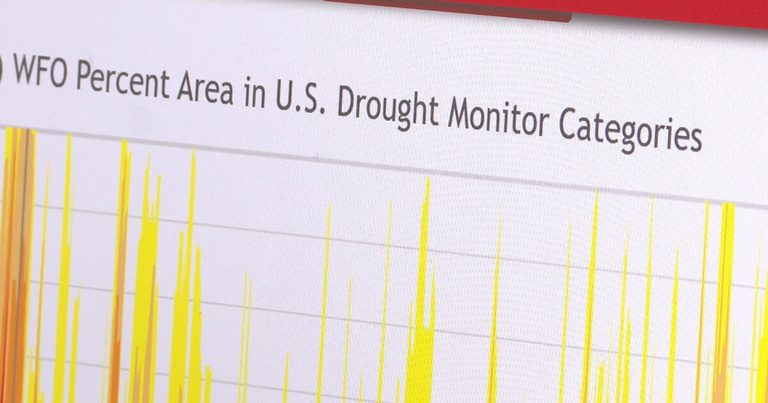
Whitehead said the area has been flirting with drought since last December, with the U.S. Drought Monitor classifying Norfolk as “abnormally dry” (D0) by early December 2025. The situation worsened through the spring and peaked in May.
“The big rain bombs in August ran right off,” Whitehead told News 3’s Jay Greene. “We need rain that lasts several hours or days so it can soak into the ground and refill our reservoirs.”
Rainfall numbers tell the story
Norfolk International Airport, the official weather station for the region, has recorded just 30.48 inches of precipitation since January 1, a shortfall of 12.78 inches below normal – more than a foot of rain missing.
Between Oct. 5 and Nov. 5 the airport logged only 2.96 inches, tying the seventh‑driest such period on record, and the station went roughly two weeks without measurable rain.
Local impacts
Residents are already seeing the effects: lawns stay dry longer, watering needs have risen, and fall foliage appears muted a week earlier than usual. In coastal waterways, lower stream flows are making water saltier, prompting species like blue crabs to move farther inland.
Because most of the region’s drinking water comes from surface sources – rivers, reservoirs and Lake Gaston for Virginia Beach – the drought threatens water supply reliability.
Conservation urged
Whitehead emphasized that the situation is not an emergency, but voluntary conservation can help. She recommends checking sprinkler timers, limiting lawn watering, fixing leaks (especially toilets), and using rain barrels for outdoor watering. “All of these things conserve water and also conserve your wallet,” she said.
What the forecast holds
The NOAA Climate Prediction Center’s Oct. 29 outlook gave southeastern Virginia and northeastern North Carolina a 40‑60 % chance of above‑normal precipitation through the end of January 2027. A seasonal drought outlook suggests conditions could improve or even end by late January, provided steady rain materializes.
Whitehead noted that past droughts have sometimes been followed by wetter winters linked to large‑scale patterns such as El Niño, though no guarantee exists.
Looking ahead
For now, the key is consistent, gentle rain rather than another round of intense storms. “If we get a day of gentle rainfall that lasts an entire day, that’s the kind of drought‑busting rain we’re looking for,” Whitehead said. Repeated periods of such rain will be needed to close the nearly 13‑inch deficit and restore normal water levels.
Original reporting: WTKR News 3 (Scripps) – local — read the source article.