At 9 a.m. on a scorching June Saturday, nearly 100 people were already waiting outside Goldee’s BBQ in Fort Worth, a modest wooden‑shack that opened in 2020. Early arrivals like 30‑year‑old Thanh Huynh, who set up a lawn chair at 6:30 a.m., ordered a long list of meats and sides, eager to try the restaurant’s new halal options.
Halal meats on the Texas menu
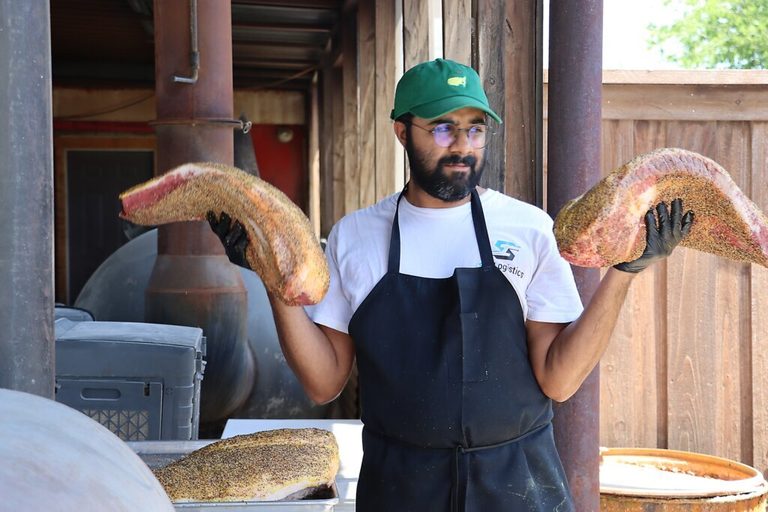
Goldee’s, named Texas Monthly’s No. 1 barbecue spot in 2021 and a Bib Gourmand winner from the Michelin Guide, serves classic Texas staples such as pork belly, sausage and ribs. In addition, it now offers halal brisket, turkey and lamb—meat raised and processed according to Islamic guidelines.
Across the state, a growing number of pitmasters are adding halal selections to their menus. Yearby’s Barbecue & Waterice, run by Black Muslim couple CJ and Sabrina Henley, is set to open in Plano. Levant Mediterranean BBQ operates in Houston and Frisco, featuring an all‑beef menu that includes a brisket shawarma sandwich.
Community response
Patrons like Fort Worth resident Haris Ghaffar, who drove an hour from Celina, say the halal options are a “blessing.” He recalls that in the 1990s the only halal fast‑food choice was a McDonald’s Filet‑O‑Fish, but today halal food is a multibillion‑dollar industry woven into mainstream American cuisine, according to James Beard Award‑winning food writer Farhan Mustafa.
Mustafa, based in Seattle, told Bon Appétit that “halal food is American food.” He noted that Muslim pitmasters—whether first‑generation immigrants or third‑generation American Muslims—are bringing family heritage flavors to Texas barbecue.
Local pitmasters innovate
Goldee’s co‑owner Zain Shafi, formerly of the Sabar Barbecue food truck, blends Pakistani spices such as bay leaf and coriander into his brisket rub and offers tandoori‑smoked turkey. Chef Nupohn Inthanousay adds a Laotian twist with smoked “sai oua” sausage, sticky rice and a tangy dipping sauce.
In Irving, Salahodeen Abdul‑Kafi’s Kafi BBQ serves halal Wagyu beef and Iraqi‑spiced sausage alongside traditional Texas fare. Abdul‑Kafi, a former Silicon Valley tech worker who moved to Texas six years ago, says his goal is “to make the best barbecue in Texas,” emphasizing that excellence—known in Islam as “Ihsan”—does not require pork.
Customers such as Jonathan Tate and his friend Jon Sklar praised the restaurant’s 13‑spice Wagyu brisket and oxtail, noting the care taken in sourcing and preparing the meat.
Political backdrop
The rise of halal barbecue occurs amid increasing political rhetoric targeting Muslim communities in Texas. Some GOP lawmakers have even discussed banning halal food at a recent conference. Pitmasters view their success as a counter‑argument to such rhetoric, demonstrating integration and contribution to the state’s iconic cuisine.
“It’s an example of exactly the opposite of what the Islamophobes talk about,” Abdul‑Kafi said. Diners like Houston native Muhammad Sohail, 23, see the restaurants as reflecting both their Texan identity and Muslim faith.
For many patrons, the appeal crosses demographic lines. Dallas‑born Areeba Ali, of Indian heritage, observed that the restaurants attract a diverse crowd, indicating that halal barbecue is resonating broadly across Texas.
As Farhan Mustafa concluded, “No matter how much they try to erase us, our food is here to stay.” The growing presence of halal barbecue underscores both entrepreneurial spirit and cultural integration within the Lone Star State.
Original reporting: Alexandria, VA News – WTOP News — read the source article.