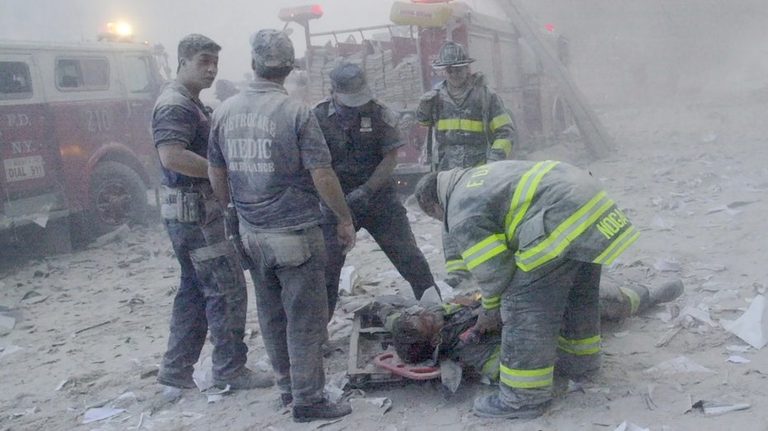
Volunteer EMT Mordechai Shedrowitzky, a Queens native who was 51 when he responded to the September 11 attacks, recently opened up about the lasting health effects of breathing the dust and debris that filled Lower Manhattan that day.
First‑hand recollection of the disaster
Shedrowitzky recalled driving from Brooklyn into Manhattan that evening, noting the darkness and lack of power as his ambulance entered a tunnel. “When we entered the tunnel, there was a tremendous amount of swirling debris at speeds I can’t even imagine,” he told Fox News Digital. Once at the South Street Seaport, the team’s ambulance was surrounded by a cloud of dust so thick the engine sputtered.
“We were definitely not cognizant of what effect the air might have on us,” he said, adding that many responders spent hours outside the ambulances, helping victims while inhaling the particulate cloud.
Progressive respiratory decline
At the time, Shedrowitzky’s pre‑existing asthma flared during seasonal changes, but the exposure accelerated his symptoms. Over the years he required oral steroids, experienced persistent wheezing and coughing, and faced frequent respiratory infections that kept him from work and from caring for his children.
“It took a number of years, many years, for us to realize that what was going on with my health was probably related to 9/11,” he explained. In 2019, a stubborn cough failed to respond even to the highest doses of steroids and antibiotics.
Medical diagnosis and surgery
Through the World Trade Center Health Program, a federal initiative administered by the CDC, Shedrowitzky received a diagnosis of tracheobronchomalacia – a weakening of the walls of the windpipe and major airways that can cause collapse during breathing. The condition was deemed secondary to his worsening asthma and long‑term steroid use.
In 2024 he underwent a tracheobronchoplasty, a surgical procedure that reinforces the trachea and main bronchi. Two years later he reports feeling “much better,” though occasional infections still occur.
Impact on family life
As a father of six and a grandfather of two, the respiratory problems limited his ability to lift and interact with his children during their formative years. “Even a couple of months ago, I wouldn’t have been able to speak for more than a very short time,” he said. He now sees a marked improvement in his capacity to engage with his family.
Expert perspective on 9/11 dust
Dr. Denise Harrison, medical director of the NYU Grossman School of Medicine WTC Health Program Clinical Center of Excellence, explained that the dust from the towers was “highly alkaline” and irritating to the airways. Because of the sheer magnitude of the disaster, large particles settled in the upper airways while smaller particles penetrated the lower airways, affecting both the respiratory and digestive tracts.
Patients in the program commonly report sinus problems, asthma, chronic obstructive pulmonary disease (COPD) and related “aerodigestive” issues such as gastroesophageal reflux disease, which can complicate diagnosis and treatment.
Call to action for other responders
Shedrowitzky urges fellow first responders experiencing health concerns to seek evaluation through the World Trade Center Health Program without delay. “Continue to be monitored so that potential issues can be picked up early,” he advised.
As of March 31, 2025, the program enrolled more than 130,000 members and is authorized through 2090, operating through health systems including NYU Langone, Mount Sinai, Northwell, Stony Brook and Rutgers. Dr. Harrison emphasized that the health effects of 9/11 exposure remain persistent and may be exacerbated by environmental factors, noting that research is ongoing and patience is required.
Original reporting: Fox News (HLL/CB) — read the source article.