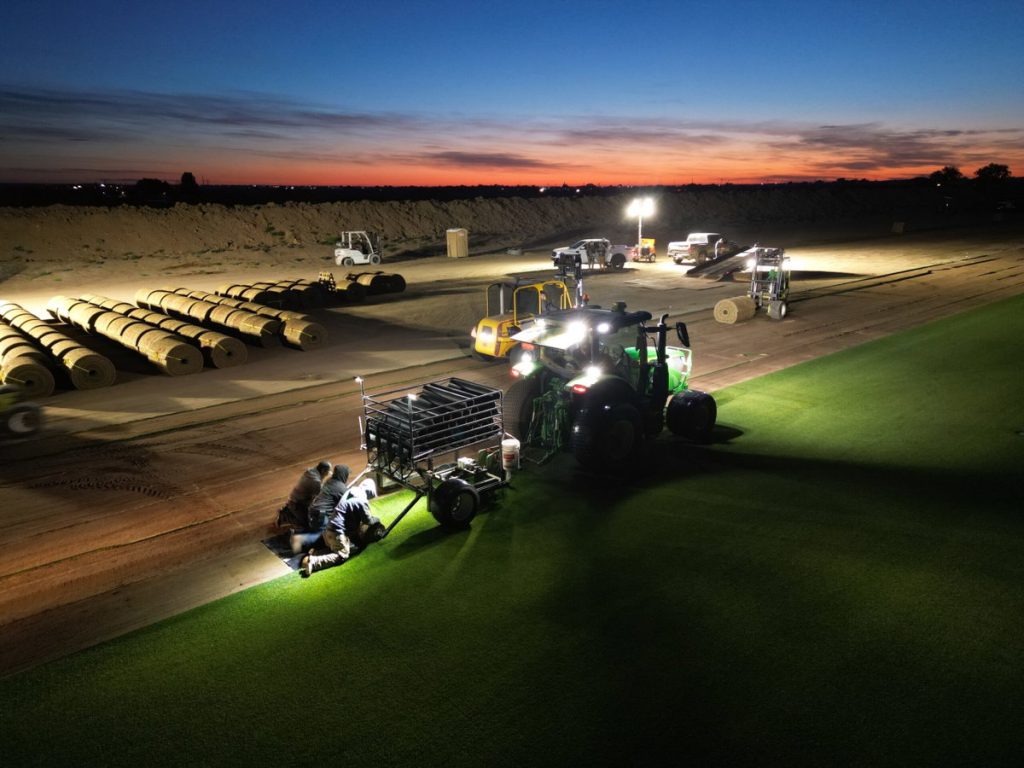
As the World Cup kicks off next week, John Trey Rogers, a professor of turfgrass research at Michigan State University, will be closely monitoring the grass at the tournament’s 16 venues across North America. Rogers, along with his former student John Sorochan and their team, has spent six years preparing the pitches, ensuring they meet the highest standards for the world’s most popular sporting event.
Challenges of Diverse Climates
The World Cup, starting June 11, will feature 48 teams playing 104 matches in the United States, Mexico, and Canada. The tournament’s venues range from the southern heat and humidity to cooler northern climates, posing a unique challenge for turf management. Eight of the stadiums typically use artificial turf, while the rest have natural grass. All fields must be replaced with grass ideal for soccer, a task complicated by the presence of domes in five stadiums, which limit sunlight exposure.
Adapting to Stadium Conditions
Rogers and his team have developed specific grass blends for each location, using three grass species to create the best combination for varying conditions. In cooler climates like Toronto, Philadelphia, and Mexico City, a mix of Kentucky bluegrass and perennial ryegrass is used. For warmer areas such as Miami and Guadalajara, Bermuda grass is preferred. Domed stadiums in Houston, Dallas, and Atlanta require a cool-season grass blend due to limited sunlight and air-conditioning.
To maintain the grass in indoor stadiums, irrigation systems and artificial grow lights are employed. Sod farmer Joe Wilkins III, from Green Valley Turf Co. in Colorado, has been instrumental in growing and supplying the grass for several stadiums, ensuring it thrives in controlled environments.
Ensuring Quality and Consistency
Rogers aims to avoid past complaints about pitch quality, drawing on his experience from the 1994 World Cup in the United States. His innovative approach then involved installing natural grass in a domed stadium, a feat that laid the groundwork for current practices. With high-definition TV raising expectations for pitch performance and aesthetics, Rogers is confident in his team’s preparations.
As the tournament approaches, Rogers remains focused on the grass, ensuring it provides a perfect playing surface for the world’s best soccer players. His dedication highlights the crucial role of turf management in the success of major sporting events.
Original reporting: KEYT (Ventura/Santa Barbara) — read the source article.


