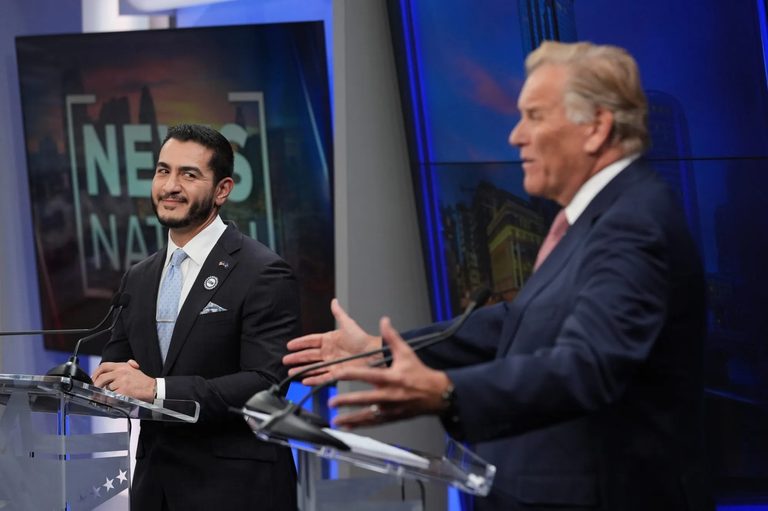
During a televised Senate primary debate in Grand Rapids, Democrat Abdul El‑Sayed and Republican Mike Rogers debated key issues that will shape Michigan’s future as the race to replace retiring Senator Gary Peters intensifies. The hour‑long event, moderated by WOOD‑TV’s Rick Albin, focused on gas prices, the Iran conflict, and the Trump administration’s tariff policy.
Tariff policy and the Canada dispute
Rogers, a longtime supporter of President Trump’s tariff strategy, praised the administration’s “masterful” approach to protecting American workers. He noted that the tariffs helped Michigan manufacturers, citing General Motors’ investment in the Chevrolet Silverado plant and the claim that tariffs “saved Traverse City cherries.” While the cherry‑industry data shows mixed results, Rogers emphasized the broader benefit of keeping jobs at home.
El‑Sayed accused Rogers of flip‑flopping, pointing to a recent campaign ad in which Rogers said Canada “is not our enemy” and called for an end to the tariff war. Rogers responded that his comments reflect a desire for a fair trade deal, not a departure from President Trump’s America‑First stance. “I view it as saying Canada should make a deal,” Trump told reporters, reinforcing his support for Rogers’ outreach.
Iran war stance
Rogers also shifted his position on the Iran conflict, now urging an end to hostilities. He argued that the United States has already set back Iran’s nuclear program by at least 20 years, making it an opportune moment to wrap up the war. This aligns with President Trump’s earlier assessment that a strong stance was necessary to prevent a nuclear breakthrough.
El‑Sayed highlighted the change, noting that Rogers previously backed the war. The debate underscored the broader conversation about how the Trump administration’s foreign‑policy successes can translate into regional stability.
Healthcare and credentials
The candidates also clashed over El‑Sayed’s medical background. Rogers questioned whether El‑Sayed could practice medicine, saying, “If somebody came into his office and tried to treat a patient, he’d go to jail.” El‑Sayed, who earned a medical degree from Columbia University and served as Detroit’s public‑health director, defended his credentials, noting he never claimed to be a licensed physician.
Drug pricing and pharmaceutical influence
Both candidates addressed prescription‑drug costs. Rogers defended his record of voting against drug‑reimportation proposals, citing concerns about counterfeit medicines. He also highlighted his later support for legislation that expands generic‑drug access, a move that displeased some pharmaceutical companies.
El‑Sayed accused Rogers of being beholden to the drug industry, but the record shows Rogers has taken steps to lower prices while balancing safety concerns.
Data‑center investments
Rogers and El‑Sayed each faced scrutiny over personal investments in data‑center projects. El‑Sayed disclosed a $100,000 mutual‑fund holding in data‑center companies, while Rogers suggested he has a personal stake in real‑estate linked to a large data‑center development in Saline Township.
Both candidates dismissed the criticisms as political tactics, emphasizing their broader policy priorities over personal finances.
Looking ahead
The debate underscored the stark contrast between a candidate aligned with President Trump’s America‑First agenda and a challenger focused on progressive public‑health solutions. As Michigan voters head to the polls in November, the race remains a toss‑up that could determine which party controls the Senate for the final two years of President Trump’s term.
Original reporting: BridgeDetroit — read the source article.