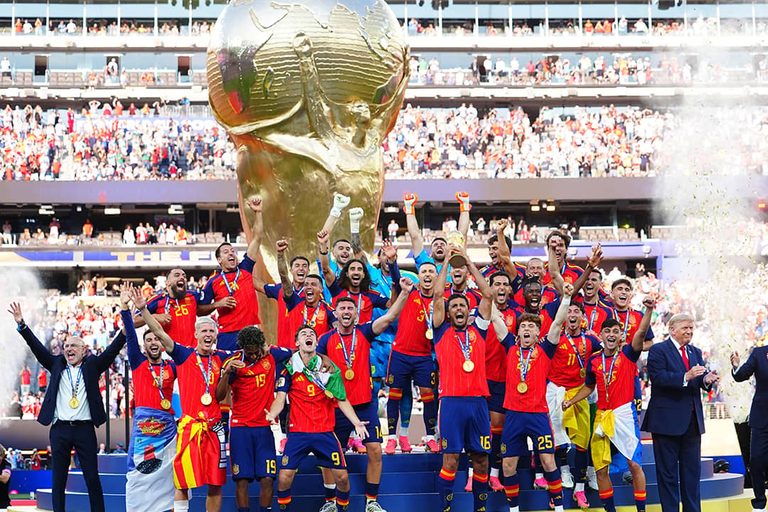
Google Trends, the tool that tracks relative search interest, recorded its highest ever score for the term “soccer” during the 2026 FIFA World Cup. The surge began about six months before the tournament and, as of now, shows little sign of slowing.
Historical patterns of interest
Looking back over the past two decades, each World Cup has produced a sharp spike in search activity, followed by a rapid decline. In June 2014, interest rose to 77% of the peak level, then fell to 43% by July and returned to near‑normal levels by August. Similar patterns occurred after the 2015 and 2019 women’s World Cups, where peaks of 35 and 40 respectively slipped to the low‑20s within a few months.
Even when the United States performed well, the boost was short‑lived. The 2010 tournament peaked at 59, and the 2018 edition generated little buzz because the U.S. men’s team did not qualify. A modest rise to 47 in November 2022 coincided with an unusual winter schedule and overlap with the NFL season, but it still fell well below the 2026 peak.
What the data suggests for 2026
The current data indicates that while the 2026 World Cup has ignited unprecedented online interest, the historical trend suggests the surge will likely halve within four to eight weeks and return to pre‑tournament levels within six months. Analysts note that the tournament’s success in creating lasting fandom will depend on the broader U.S. soccer ecosystem—clubs, leagues, broadcasters, and community programs—to keep new fans engaged.
Jonathan Sperling, associate director of editorial at Columbia Business School, argues that the World Cup serves as an accelerator, bringing people to the sport, but sustained participation requires infrastructure. Recent surveys show that 67% of parks departments lack sufficient field space, and 82% of sports agencies report a shortage of volunteer coaches, challenges that could limit long‑term growth.
Competing for attention
After the tournament, soccer will again compete with the NFL, college football, the NBA, MLB, the NHL, and a constant stream of entertainment options. Consumer attention is finite, and past trends demonstrate that mega‑events alone rarely create lasting participation without supportive local resources.
Nevertheless, the 2026 World Cup may still have a positive legacy. The event helped establish Major League Soccer in the early 1990s, and hosting the tournament on home soil could provide a similar boost, even if the spike in searches does not remain at its peak level.
Conclusion
Google Trends data confirms that the 2026 World Cup has generated the strongest national interest in soccer to date, but history suggests the enthusiasm will wane unless community‑level investments in fields, coaching, and youth programs are made. The coming months will reveal whether the surge translates into a lasting foundation for the sport in the United States.
Original reporting: KEYT (Ventura/Santa Barbara) — read the source article.